
Managing Distributed Development Teams: Strategies to Improve Collaboration
Need quick insights? Summarize with AI & save time
 ChatGPT
 Perplexity
 Claude
 Google AI Mode
Table of Content
- Introduction
- Understanding Distributed Development Teams
- Proven Strategies to Improve Collaboration in Distributed Development Teams
- Conclusion
- FAQs
Summary:
Managing distributed development teams comes with unique challenges, from time zone differences to communication gaps. This blog explores proven strategies to enhance collaboration, streamline workflows, and maintain productivity across remote teams.
Learn how to implement clear communication protocols, adopt the right tools, build a strong documentation culture, and foster team bonding. Whether you’re scaling global teams or optimizing existing ones, these actionable tips help ensure your distributed development teams stay aligned, motivated, and high-performing.
Introduction
Managing distributed development teams has become a calculated necessity for modern organizations as remote and global work models continue to gain traction. With talent spread across different time zones, cultures, and communication styles, corporations are discovering both the remarkable competence and the trustworthy challenges of working without physical boundaries.
While distributed collaboration enables access to leading global proficiency and round-the-clock productivity, it particularly demands strong systems, clear communication, and intentional leadership. This blog explores practical strategies to enhance teamwork, streamline workflows, and foster a high-performing environment where distributed teams can thrive.
Understanding Distributed Development Teams
Distributed development teams are groups of software professionals who work together from different geographical locations, time zones, and sometimes even different cultural backgrounds. Instead of operating from a single office, these teams rely on digital tools, cloud-based systems, and well-defined communication channels to collaborate effectively.
As remote and hybrid work models continue to rise, the distributed approach has become a strategic advantage, allowing companies to hire global talent, reduce operational costs, and operate around the clock. However, managing distributed development teams comes with its own set of challenges. Differences in time zones can slow down decision-making, cultural diversity may lead to communication gaps, and the lack of face-to-face interactions can impact team bonding and trust.
To overcome these hurdles, organizations must adopt structured workflows, establish communication best practices, and leverage collaboration platforms that keep everyone aligned. When managed well, distributed teams can achieve exceptional productivity, innovation, and long-term project success.

Proven Strategies to Improve Collaboration in Distributed Development Teams
To build high-performing remote teams, organizations must focus on practical, actionable methods that strengthen communication and alignment across distances.
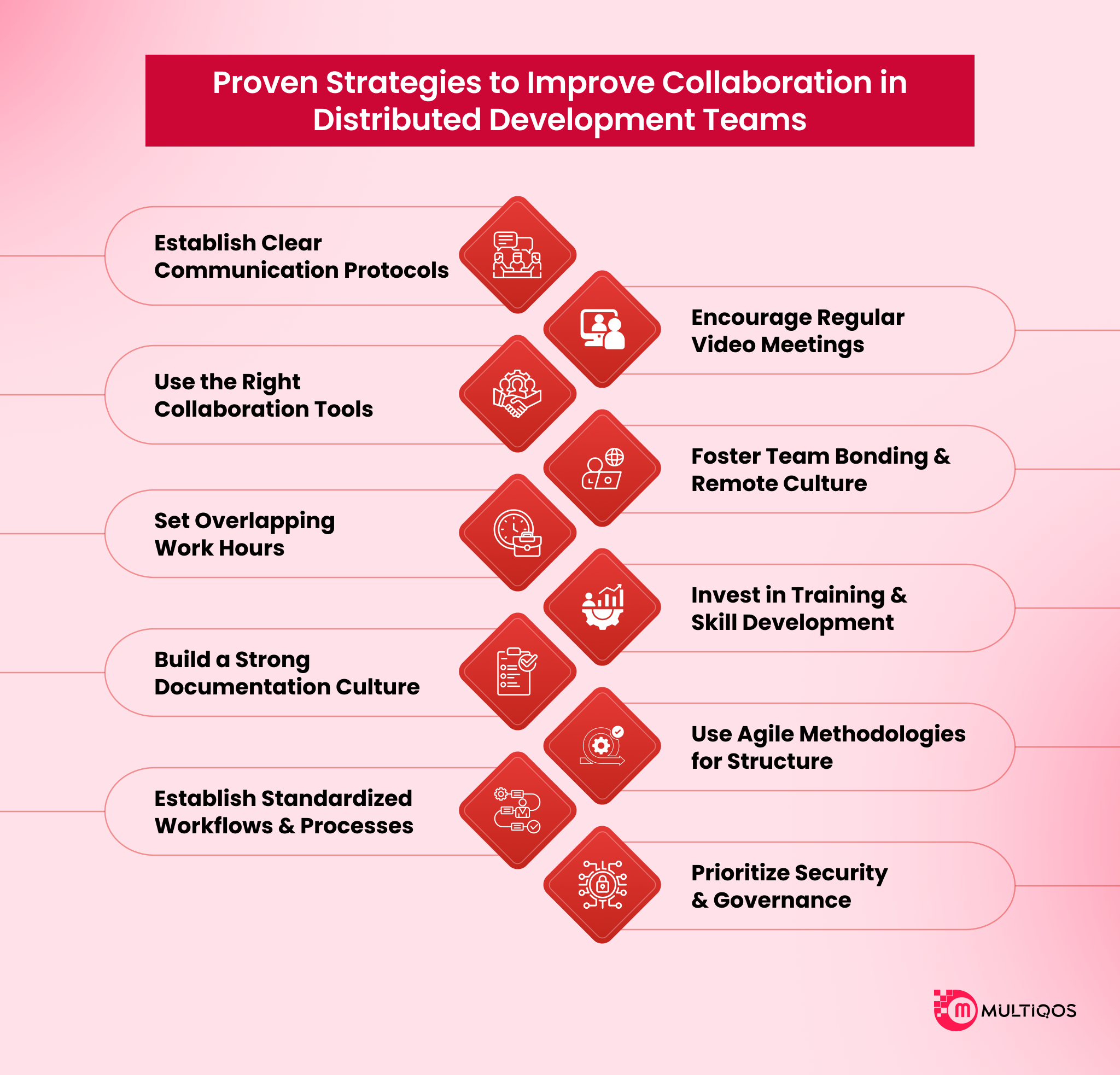
1. Establish Clear Communication Protocols
Clear, structured communication is the foundation of managing distributed development teams. Define your channels for daily updates, urgent queries, and documentation sharing so everyone knows precisely where information lives. Creating communication etiquette, such as likely return times or using tags for priority, helps reduce noise and ensures no critical detail gets missed.
2. Use the Right Collaboration Tools
Tools turn into the virtual office for distributed teams. Platforms like Slack for speedy chats, Jira for event tracking, Confluence for documentation, and GitHub for code reviews confirm work flows smoothly. When managing distributed development teams, selecting tools that merge well with every one different prevents silos, escalates transparency, and keeps the overall team arranged on project missions.
3. Set Overlapping Work Hours
Time zone disparities can become demanding, though a small overlap in working hours can dramatically adjust coordination. It allows prompt clarifications, faster decision-making, and real-time collaboration when needed. This simple practice is often one of the key elements in managing distributed development teams efficiently and reducing project delays.
4. Build a Strong Documentation Culture
In distributed environments, documentation replaces hallway conversations. Creating meticulous user stories, technical specs, meeting notes, and SOPs ensures everyone is on the same page at all times. A reliable documentation culture not only upholds asynchronous work but addition transforms into an indispensable tool for managing distributed development teams with authenticity and clarity.
5. Establish Standardized Workflows & Processes
Standard workflows eliminate confusion and create predictable routines. Define processes for code reviews, testing cycles, approvals, deployments, and resolution loops. These standardized systems manage distributed development teams smoother by ensuring complete members understand how tasks move from start to finish, regardless of their location.

6. Encourage Regular Video Meetings
Regular video interactions humanize remote involvement and build trust. Daily standups, weekly check-ins, sprint reviews, and problem-fixing sessions help team members stay participating and connected. This practice is significant when managing distributed development teams, as it amplifies communication and avoids the sense of isolation simple in remote setups.
7. Foster Team Bonding & Remote Culture
Collaboration thrives when people feel comfortable with each other. Virtual team-building sessions, fun challenges, recognition programs, and general chats help create a sense of belonging. A strong remote way of culture encourages open communication, elevates belief, and keeps the team revved up, balanced when they’re miles apart.
8. Invest in Training & Skill Development
Distributed teams perform excellent when their skills develop with the project’s needs. Offering courses, workshops, technical webinars, and mentorship programs ensures everyone stays updated with the latest technologies and software development services standards. Continuous learning beyond amplifies trust and improves team performance.
9. Use Agile Methodologies for Structure
Agile implementations transport rhythm and accuracy to distributed setups. Sprint thinking, retrospectives, Kanban boards, and continual merger pipelines help the team stay neat and responsible. Instant is predominantly workable when managing distributed development teams, as it provides transparency, keeps priorities clear, and ensures an uninterrupted flow of value.
10. Prioritize Security & Governance
Security becomes even more important when teams work remotely. Implementing strong authentication, encrypted communication, and role-based access ensures safe access to project resources. Clear governance policies for data handling, documentation, and code reviews help maintain compliance and prevent vulnerabilities. With the right security measures in place, distributed teams can collaborate confidently and protect sensitive information throughout the development cycle.
Conclusion
Managing distributed development teams is no longer a challenge; it’s a strategic opportunity. When organizations invest in the right communication practices, leverage modern collaboration tools, and create a culture of trust and accountability, their distributed teams can outperform even traditional in-office setups.
With clear processes and consistent alignment, companies unlock higher productivity, faster innovation, and a more diverse talent pool that strengthens project outcomes. As businesses continue to scale and build complex digital solutions, having the right people becomes essential.
Whether you’re expanding your team or starting a new project, choosing to hire software developers with strong remote collaboration experience can accelerate your success and ensure your distributed model runs efficiently. The future of teamwork is distributed, and companies that adapt today will lead the market tomorrow.
FAQs
The most common challenges consist of communication gaps, time zone differences, lack of authentic-time collaboration, inconsistent documentation, and trouble in maintaining team adjustment. With the proper tools, structured workflows, and clear communication protocols, these challenges transform into levelable, and teams can stay operational.
Upgrading collaboration starts with using the true communication tools, constructing overlapping work hours, maintaining strong documentation, and adopting agile approaches. Endless video meetings, described workflows, and cultural bonding activities particularly help remote teams stay connected and streamlined.
Tools like Slack or Microsoft Teams for communication, Jira or Trello for project management, GitHub or GitLab for version control, and Confluence or Notion for documentation are widely used. These tools create transparency, streamline tasks, and enable smooth collaboration across locations.
Distributed teams give ventures access to global capability, extended work hours, reduced productive costs, and increased scalability. They also authorize faster project delivery and enhanced innovation by delivering diverse talent sets together, constructing them a strong model for modern software prosperity.
MultiQoS provides an end-to-end substitute for building and managing distributed development teams, including team enhancement, custom software evolution, project management, and long-term collaboration strategizing. With experienced developers, clear systems, and reliable communication models, we help businesses scale faster and maintain high-quality delivery, no matter where their teams are located.

Get In Touch

Get Stories in Your Inbox Thrice a Month.

Rethinking Software Delivery through AI Workflow Orchestration: The New Engineering Playbook

Tips for Smooth Software Development in Regulated Industries
Microservices Architecture for Large Systems: Building for the Future