
Proven Legacy System Modernization Strategies for Digital Transformation
Need quick insights? Summarize with AI & save time
 ChatGPT
 Perplexity
 Claude
 Google AI Mode
Table of Content:
- Introduction
- What Defines A Legacy System?
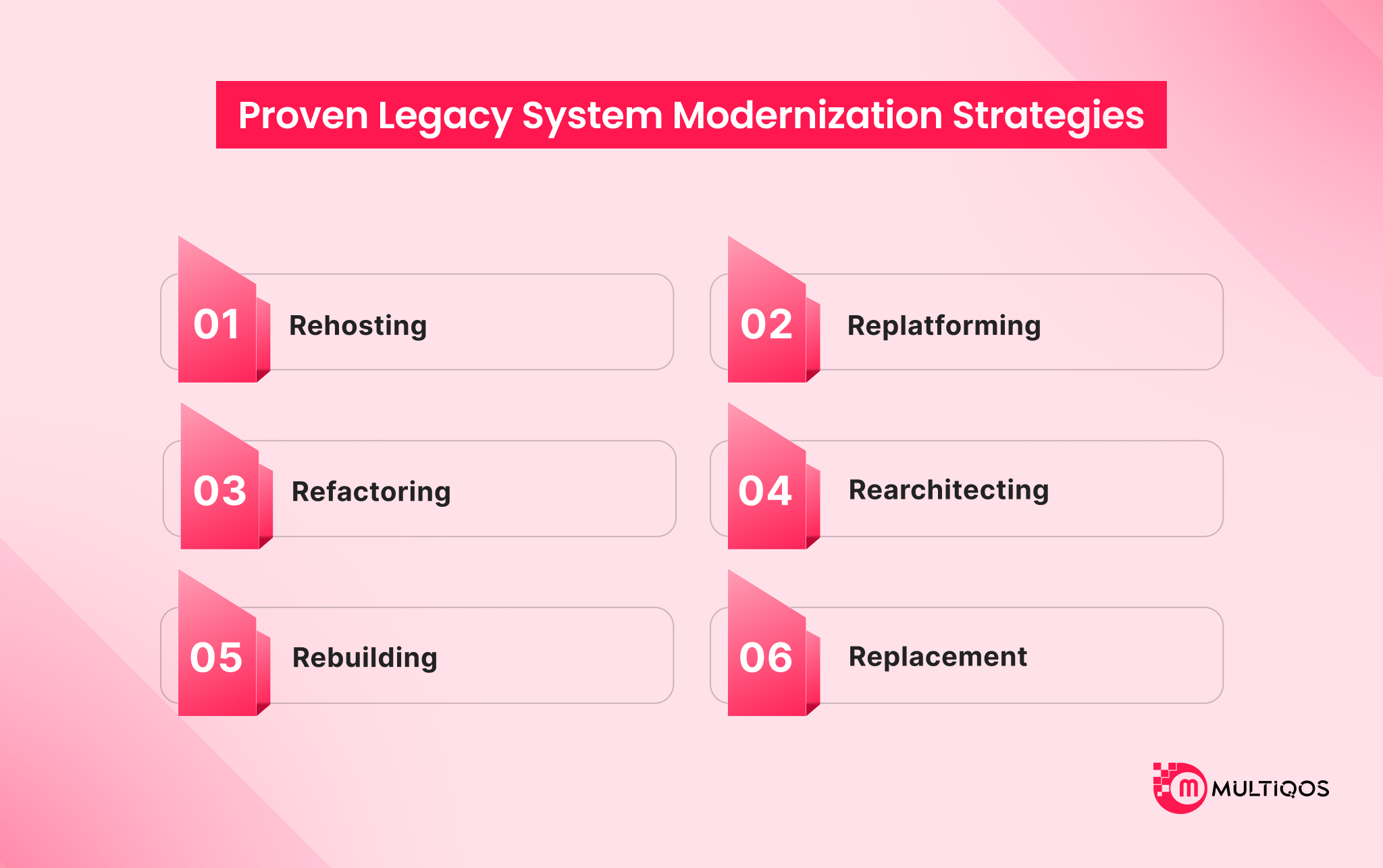
- Proven Legacy System Modernization Strategies
- Choosing the Right Modernization Strategy
- How MultiQoS Supports Enterprise Modernization?
- Conclusion
- FAQs
Summary
Legacy systems can slow down growth, increase maintenance costs, and limit innovation. To stay competitive, businesses need smart legacy system modernization strategies that improve performance without disrupting operations. This blog explores proven approaches such as re-platforming, refactoring, cloud migration, and API integration to help organizations modernize step by step.
It highlights how modernization enhances security, scalability, and user experience while supporting long-term business goals. Whether you’re dealing with outdated infrastructure or rigid applications, the right strategy can turn legacy systems into powerful enablers of digital transformation and future-ready technology.
Introduction
Businesses can’t afford to be slowed down by outdated technology. Many organizations still rely on legacy systems that were built years, and sometimes decades, ago. While these systems once supported growth, they now often limit innovation, scalability, and customer experience.
Legacy system modernization has become a critical step in achieving real digital transformation. In fact, 74% of organizations cite legacy systems as a major barrier to digital transformation, highlighting the common and urgent nature of this challenge.
However, as a result of updating its core systems, a company can boost performance, fortify security, reduce operational costs, and act more quickly when marketing changes. This blog explores proven legacy system modernization strategies that help organizations move away from outdated technology and build a more flexible, future-ready digital foundation.
What Defines A Legacy System?
A legacy system is any old software, hardware, or technology that a business still uses because it supports important operations, even though it is outdated. These systems were often built years ago using older programming languages or platforms and may still work, but they struggle to keep up with today’s business needs. Legacy systems are usually hard to update, costly to maintain, slow to integrate with modern tools, and can create security risks. Over time, they limit flexibility and make digital transformation more challenging.
- Built on outdated technology or programming languages
- Difficult and expensive to maintain or upgrade
- Limited integration with modern applications and cloud platforms
- Slower performance compared to modern systems
- Higher security risks due to unsupported software
- Heavily dependent on a few experienced employees
- Lack of scalability to support business growth
Proven Legacy System Modernization Strategies
Modernizing outdated systems is not a one-size-fits-all approach. Businesses choose different paths based on budget, risk, timelines, and long-term goals. Below are some proven legacy system modernization strategies that organizations use to move toward digital transformation while maintaining business continuity.
1. Rehosting (Lift and Shift)
This strategy involves moving an existing application to a new environment, usually the cloud, without changing its core code. It is one of the fastest legacy system modernization strategies and works well when time is limited. While it does not improve performance or design significantly, it helps reduce infrastructure costs and prepares systems for future improvements.
2. Replatforming
Replatforming makes small changes to the application so it can better use modern platforms or cloud services. The core functionality stays the same, but performance, scalability, and cost efficiency improve. This approach balances speed and value, making it a popular choice among legacy system modernization strategies.
3. Refactoring
Refactoring focuses on improving the internal code structure without changing how the system works for users. It helps eliminate technical debt, improve performance, and make the system easier to maintain. Although it requires more effort, refactoring supports long-term stability and flexibility.
4. Rearchitecting
This strategy involves redesigning the system architecture to meet modern business and technology needs. Applications may be broken into microservices or redesigned for cloud-native environments. Rearchitecting is more complex but delivers high scalability, better performance, and future-ready systems, making it a powerful option within legacy system modernization strategies.
5. Rebuilding
Rebuilding means creating the application again from scratch using modern technologies while keeping the original business logic. This approach allows businesses to remove old limitations completely. It takes more time and investment but results in a cleaner, more efficient system.
Choosing the Right Modernization Strategy
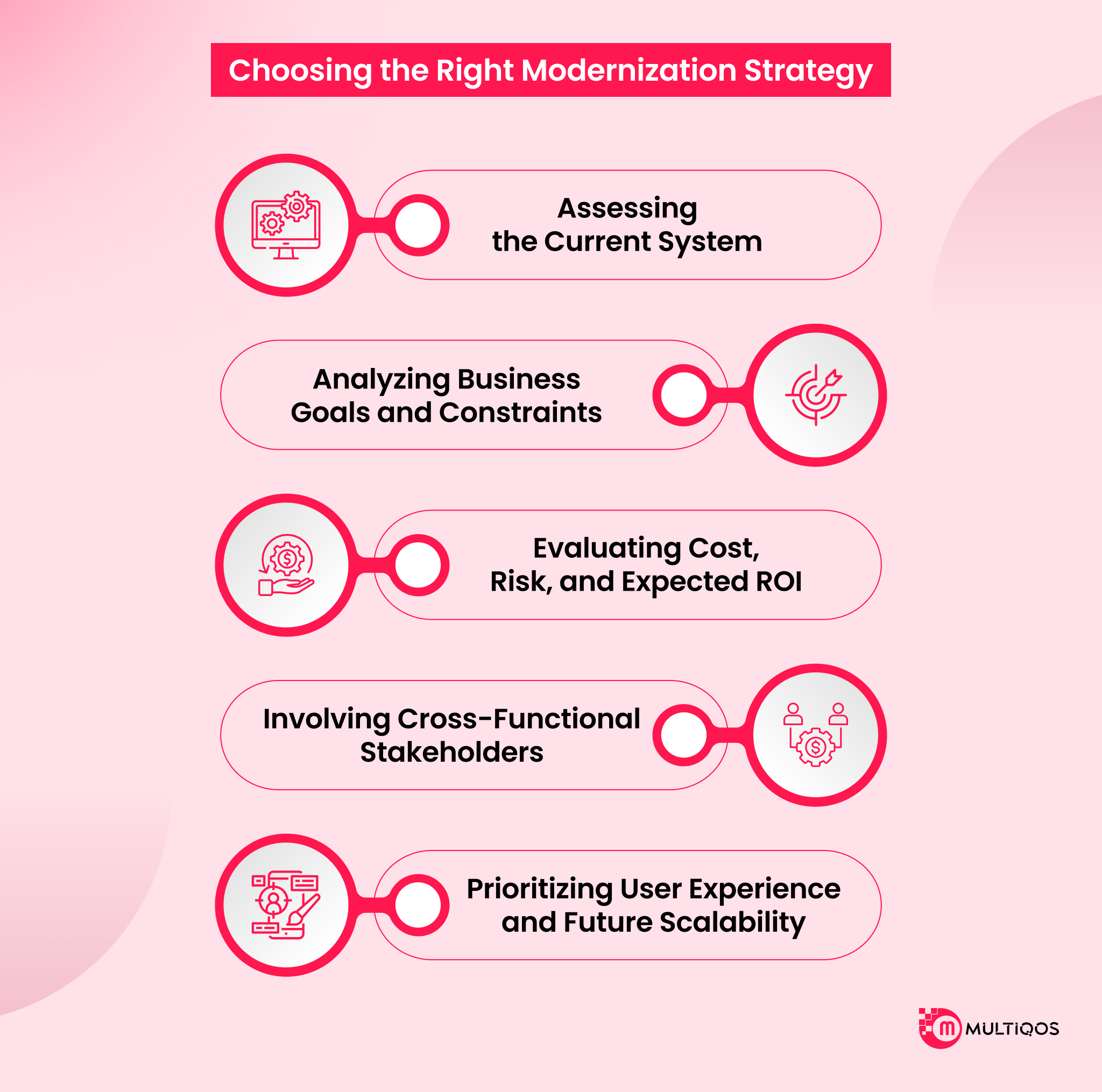
Choosing the right modernization approach is critical to long-term success. Not every legacy system needs the same solution, and selecting the wrong path can increase cost and complexity. The goal of legacy system modernization strategies is to align technology upgrades with business needs while minimizing risk and maximizing value.
1. Assessing the Current System
Begin by evaluating how the existing system performs today. Look at its technology stack, security posture, integrations, and maintenance challenges. Understanding what works and what no longer adds value helps narrow down the most suitable Legacy System Modernization Strategies.
2. Analyzing Business Goals and Constraints
Modernization should directly support business objectives such as faster delivery, better customer experience, or operational efficiency. At the same time, consider constraints like budget, timelines, compliance requirements, and internal capabilities.
3. Evaluating Cost, Risk, and Expected ROI
Each modernization option carries different financial and operational risks. Comparing upfront costs with long-term benefits helps determine whether the investment will deliver meaningful returns and sustainable improvements.
4. Involving Cross-Functional Stakeholders
Engaging teams from IT, business, operations, and end users ensures better decision-making. Collaboration helps identify hidden risks early and ensures the modernized system supports real-world workflows.
5. Prioritizing User Experience and Future Scalability
A successful modernization effort focuses on ease of use and long-term growth. Systems should be intuitive for users today and flexible enough to scale, integrate, and evolve as business needs change.
How MultiQoS Supports Enterprise Modernization?
MultiQoS helps enterprises modernize their systems by taking a practical, business-first approach rather than forcing one fixed solution. Their team starts by understanding existing applications, infrastructure, and business challenges, then maps the right path forward using proven legacy system modernization Strategies. Whether it involves replatforming, refactoring, rebuilding, or system replacement, MultiQoS focuses on minimizing disruption while improving performance, security, and scalability.
What sets us apart is our end-to-end digital transformation services that go beyond just upgrading technology. From consulting and architecture design to development, cloud migration, and ongoing support, we ensure modernized systems are aligned with long-term business goals. This holistic approach enables enterprises to reduce technical debt, improve user experience, and build future-ready platforms that support continuous growth and innovation.
Conclusion
Legacy systems don’t have to hold your business back. With the right approach, they can be transformed into flexible, scalable, and future-ready platforms. The key is choosing legacy system modernization strategies that align with your business goals, technical needs, and long-term vision. Whether it’s a gradual upgrade or a complete replacement, modernization presents an opportunity to enhance performance, mitigate risk, and unlock innovation.
As digital demands continue to evolve, investing in the right enterprise software development approach ensures your systems can adapt, grow, and support new technologies with ease. By modernizing today, businesses position themselves to move faster, serve customers more effectively, and remain competitive in an increasingly digital world.
FAQs
Outdated systems slow down innovation and increase operational costs. Modernizing them enables businesses to adopt new technologies, improve customer experience, and support faster digital transformation without major disruptions.
Common strategies include rehosting, replatforming, refactoring, rearchitecting, rebuilding, and replacing legacy systems. The right choice depends on system complexity, business goals, budget, and risk tolerance.
Start by assessing your current system, business objectives, and constraints. Evaluate cost, risk, and expected ROI, involve key stakeholders, and focus on user experience and future scalability.
Yes, with proper planning and phased execution, modernization can be done with minimal downtime. Many businesses modernize systems gradually to ensure continuity while improving performance and reliability.
We help businesses assess their existing systems, choose the right modernization strategy, and implement solutions that align with their goals. From planning and development to testing and ongoing support, our team ensures a smooth modernization journey with minimal disruption. Contact us to discuss how we can modernize your legacy systems for long-term digital success.

Get In Touch

Get Stories in Your Inbox Thrice a Month.
Digital Transformation Roadmap 2026: A Practical 6‑Step Guide for Mid‑Market Enterprises
Digital Transformation Trends: 8 Ways Enterprises Are Being Reshaped
Top Must-Have Digital Transformation Tools for Business Growth in 2025