
AI E-Commerce Personalization: Creating Customer Experiences That Convert
Need quick insights? Summarize with AI & save time
 ChatGPT
 Perplexity
 Claude
 Google AI Mode
Table of Content
- Introduction
- What Is E-Commerce Personalization?
- Types of E-Commerce Personalization
- Why Personalization Has Become Essential for Modern E-Commerce
- Key AI Technologies Powering E-Commerce Personalization
- High-Impact Use Cases of AI Personalization in E-Commerce
- Benefits of AI-Powered Personalization
- A Step-by-Step Strategy to Implement AI Personalization in E-Commerce
- Enhancing Artificial Intelligence-Driven Customer Experiences with MultiQoS
- FAQs
Summary
Online shopping doesn’t work with generic suggestions anymore. People expect to see products that match what they want from the start. If that doesn’t happen, they leave or keep searching longer than they should. As catalogs grow, simple recommendations stop working. Results feel off, and the experience becomes inconsistent. A better way looks at what users actually do—what they click, compare, and revisit. When systems respond to that, people find what they need faster, and conversions improve.
Introduction
Online shoppers don’t respond to generic suggestions anymore. They expect relevance from the first interaction. Personalization sounds simple, but it breaks down as catalogs grow and traffic increases. Recommendations lose accuracy, and users spend more time searching than they should.
Scale creates the real challenge. Most platforms handle thousands of products and constant user activity. Traditional segmentation doesn’t keep up anymore. User expectations have already changed—platforms like Amazon and Netflix have set a much higher standard. Users expect relevant results almost instantly. That’s where most systems fall short.
Most setups still rely on fixed rules, while user behavior keeps changing. Preferences shift quickly, and static segments miss that change. As businesses scale, delivering this level of relevance becomes harder without a structured approach like an AI implementation roadmap that outlines how to build and scale personalization effectively.
A better approach looks at what users actually do. Someone clicks on a product, compares a few options, leaves, then comes back later. That tells you more than any segment ever will. When systems pick up on these signals, users don’t have to search as much. They find what they need faster. That usually leads to better conversions. Data from McKinsey & Company points in the same direction—companies that get this right tend to grow faster. Now let’s look at how to make it work in practice.
What Is E-Commerce Personalization?
E-commerce sites use the information they have about customers to make shopping feel more tailored to each person who visits. If someone has already looked at something on the e-commerce site, then the e-commerce site should use that information about the customer.
The e-commerce site should show customers things that make sense based on what they did on the e-commerce site. Take a simple case. Someone looks at a smartphone, compares a few options, and adds one to the cart—but doesn’t buy. When they come back, the site doesn’t start fresh. It picks up from that point. Maybe even highlight that the price of the smartphone has gone down.
The e-commerce site might also suggest options that cost about the same as the smartphone. The e-commerce site does not start over from the beginning when someone comes back to the site. The e-commerce site continues from where the customer left off.
That’s where product recommendations, search results, and on-site content start to adjust. The site changes what it shows based on earlier actions.
When that happens, the whole experience of shopping on the e-commerce site feels easier for the customer because the e-commerce site is showing them things that are relevant.
Types of E-Commerce Personalization
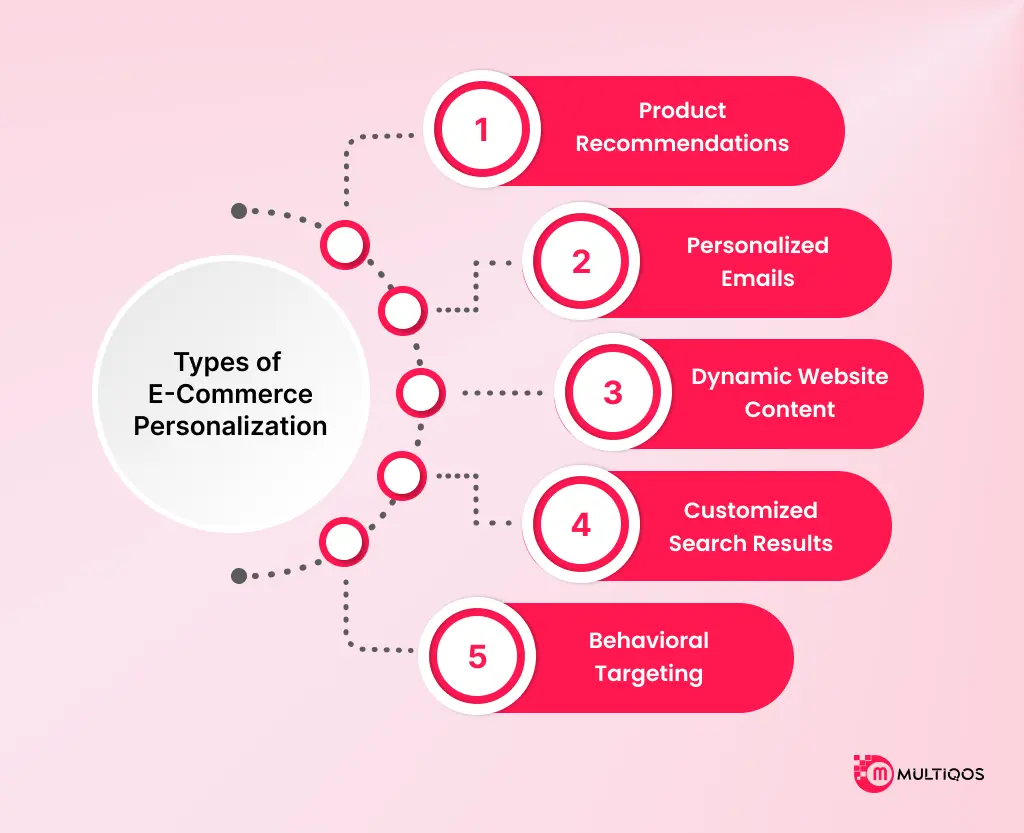
Product Recommendations
Product recommendations help users cut through too many choices. Instead of showing broad options, platforms can narrow things down. If someone looks for a phone within a budget, they expect clear and useful choices—not generic listings.When these suggestions stay relevant, users move forward faster. If they don’t, users simply skip them.
Personalized Emails
Personalized emails help bring users back to the site after they leave. A cart reminder, a product they checked, or a small offer works because it connects to something they already showed interest in. It feels like a continuation, not a random message.
Dynamic Website Content
Dynamic content makes the website feel responsive. A returning user sees products or categories they have already explored. A new user sees general options like trending items. The structure stays the same, but the experience feels more relevant.
Customized Search Results
Personalized search results make the search more useful. The thing is, different people want results even when they are searching for the same thing. So when a website shows you results based on what you have done and what you like, it is much easier for you to find what you need. You do not have to put in a lot of effort.
Behavioral Targeting
Behavioral targeting is when a website responds to your current activity. For example, if you keep looking at the product or have items in your shopping cart, it shows you are really interested. At that point, the website can send you a reminder or a special offer to help you decide. It does not just send you offers as it does to everyone else. It checks what the user actually did. Then respond in a way that makes sense.
Why Personalization Has Become Essential for Modern E-Commerce
Shifting Customer Expectations
Customers don’t want to dig through irrelevant products. They expect to see what fits them right away. Think about it. If you keep scrolling and still don’t find anything useful, you leave. No one waits anymore. Platforms like Amazon and Netflix trained people to expect quick, relevant results. That expectation now applies to every e-commerce site. That expectation now applies to every e-commerce site and reflects the broader impact of AI in retail.
Using Data to Deliver Relevant Experiences
Most e-commerce platforms already collect data. Clicks, searches, past purchases. These things clearly show what a person wants. The real difference comes from how you use that data. If someone shows interest in a category, show more of that. If they compare products, help them narrow it down. Don’t push random items. This makes the journey easier. It also helps teams focus their marketing instead of guessing.
Business Impact of Personalization
This goes beyond experience. It affects results.
When people see relevant products, they explore more and make decisions faster. That improves conversions and increases order value. It also brings them back.
When the experience feels easy, people return. They don’t want to start from zero on another site.
Key AI Technologies Powering E-Commerce Personalization
These technologies help businesses understand what users do and respond quickly. These also support modern AI-driven software development for building smarter digital solutions.
Machine Learning for Customer Understanding
Machine learning in e-commerce helps you read actual user behavior. It tracks clicks, searches, and purchases to keep refining preferences. Netflix runs on this model. Around 75–80% of what people watch comes from recommendations, not search. That’s what strong customer understanding looks like.
Recommendation Systems for Product Suggestions
Recommendation systems directly influence buying decisions. They guide users toward relevant products instead of making them search again. Amazon proves this well. Its recommendation engine drives about 35% of total revenue. When suggestions make sense, users move faster.
Predictive Analytics and Smart Search
Predictive analytics helps you act before the user asks. You bring relevant products upfront. At the same time, smart search ranks results based on user intent. This helps people find what they want faster and makes them more likely to buy, especially when there are many options.
Real-Time Personalization at Scale
Real-time personalization keeps the experience in sync with user actions.
As users browse, the platform adjusts instantly. Brands using this approach often see higher conversions.

High-Impact Use Cases of AI Personalization in E-Commerce
Most e-commerce teams already use personalization in some way. The difference shows in how they actually use it. A lot of setups still run on fixed rules. That works for a while, but it starts breaking as user behavior changes. People don’t browse the same way every time. That’s where AI e-commerce personalization starts to make a real difference. It reacts to what users do instead of relying on assumptions.
Personalized Product Discovery
Users don’t usually land on a site with a clear decision. They check a few products, compare options, and go back and forth. A good system pays attention to that. If someone spends time on a few mid-range smartphones, the platform should stay in that range. It should bring similar options, price drops, or close alternatives. This keeps things simple. Users do not feel like they have to start from scratch every time they click on something
Smart Cross-Selling and Upselling
Most users focus on the main product. They don’t go looking for add-ons unless something brings them into view. So the platform needs to step in at the right moment. If someone adds a laptop to the cart, showing a bag, mouse, or warranty makes sense. It fits the situation. It doesn’t feel random. When suggestions match what the user is already doing, they feel useful instead of forced.
Adaptive Website Experiences
Not every user behaves the same way. Some explore. Some come back with a clear idea. The experience should reflect that. If a user keeps checking fitness products, the homepage should lean in that direction. It can show related items or categories instead of general offers. The layout doesn’t need to change. Just the content. That alone makes the experience feel more relevant.
Conversational Shopping Assistance
Users leave when they don’t find answers quickly. The platform can guide users by making them search through many pages. If someone wants the phone under a certain price, they want clear options. When the system responds properly, it removes hesitation. The decision feels easier.
Targeted Marketing Campaigns
Most people do not purchase their visit. They check something, leave, and move on. Follow-ups matter here. If someone looks at a product but doesn’t buy, a reminder with that same product or similar options works better than a generic message. Timing matters too. If a message appears at the time, it seems relevant and not annoying.
Personalization in online shopping works when it is based on how people actually behave.It doesn’t try to control everything. It just makes small parts of the journey easier. And when that happens, users don’t have to think too much. They find what they need and move on.
Benefits of AI-Powered Personalization
AI personalization helps online shopping companies improve results. Businesses can use the information they have about their customers to give them experiences that lead to results.
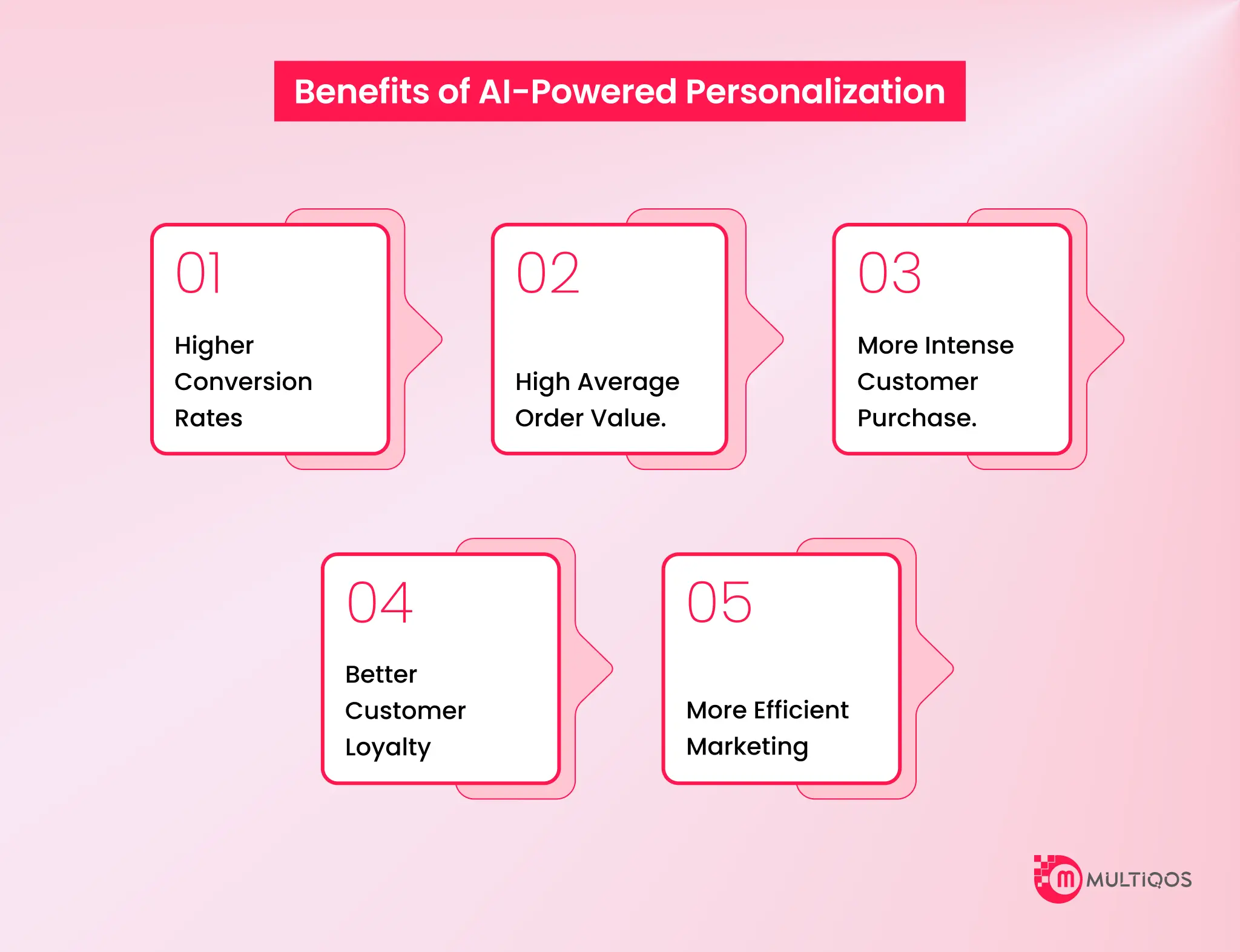
Higher Conversion Rates
Customer conversion optimization in e-commerce enables web-based personalized product suggestions and content to prompt people to make purchases faster.
High Average Order Value
The customized shopping process usually causes customers to include complementary items that create greater value for each order.
More Intense Customer Purchase
AI-enhanced customer experience also allows businesses to show customers relevant content and recommendations. This motivates them to spend time looking at products.
Better Customer Loyalty
Brands can develop effective, consistent, and relevant interactions that will lead to repeated purchases and long-term relationships using AI customer journey optimization.
More Efficient Marketing
The presence of AI personalization tools allows companies to deliver the correct audience the relevant campaigns to enhance marketing performance and investment returns.
A Step-by-Step Strategy to Implement AI Personalization in E-Commerce
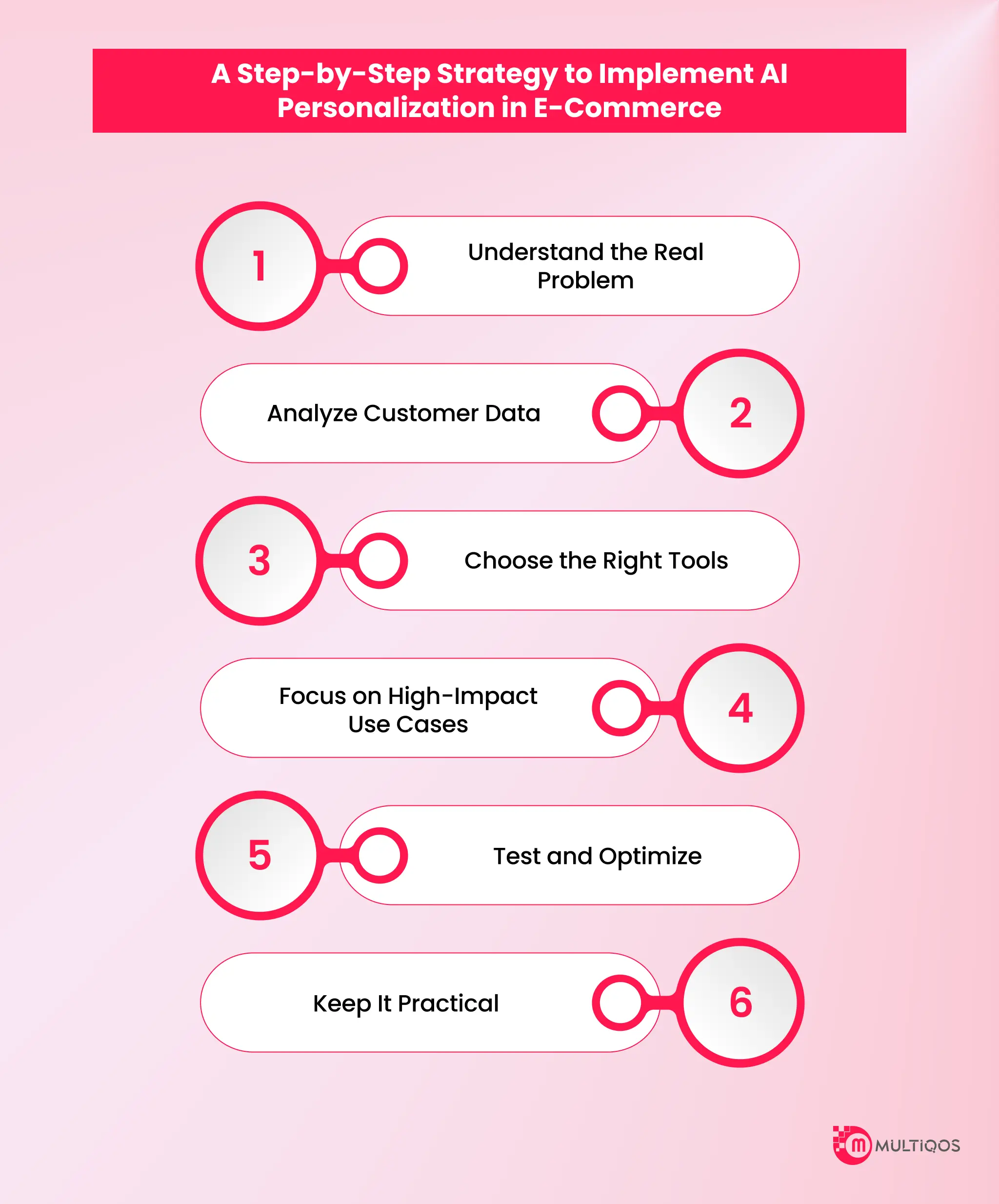
AI e-commerce personalization isn’t really a technology problem—it comes down to how you use what’s already there. Without a plan, things can feel messy and don’t work well. A simple plan makes it easier to move. Here are some steps to make it work:
Understand the Real Problem
Most of the time, the issue isn’t a lack of technology. It’s how it’s used. Teams jump into tools without thinking through what they’re actually trying to solve. That’s when things start to feel scattered. Keeping it simple helps more than people expect.
Analyze Customer Data
Start with what users do. Check what they look at, search for buy, and where they stop. You’ll see patterns. Some products get attention but no conversions. Some users keep coming back but don’t buy. That kind of detail matters.
Choose the Right Tools
This is where things can go wrong quickly. It’s easy to keep adding tools. Instead, pick what you actually need. Something that helps you understand behavior, group users, and run things like AI product recommendations without making the setup heavy.
Focus on High-Impact Use Cases
Trying to personalize everything sounds good, but it rarely works. Start with a few areas like AI product recommendations, search, a targeted campaign or two. These are easier to handle, and you’ll see results sooner.
Test and Optimize
Once it’s live, don’t leave it alone. Watch what people do. Try small changes. See what works, what doesn’t, and adjust. That’s how this improves over time.
Keep It Simple
At the end of the day, making things personal is not about doing a lot of things. It is about doing things correctly. Keep customer experiences focused on Customer Experiences. Do not think about it much, and Customer Experiences will start working the way Customer Experiences are supposed to work.
Enhancing Artificial Intelligence-Driven Customer Experiences with MultiQoS
Personalisation isn’t the challenge anymore. Getting it to work is. We keep seeing the same issue. Teams roll out tools and campaigns, but the system doesn’t keep up with user behaviour. A customer looks at one product, and the platform suggests something unrelated. Recommendations fell off. Campaigns go live without reflecting what users actually did. Teams see clicks and traffic, but conversions don’t move. To fix this, teams often stack more tools. That only adds confusion.
At MultiQoS, we focus on fixing what already exists instead of replacing everything. We connect data, systems, and user actions so everything works together in real time. We start by organizing and connecting data so it reflects what users actually do. Then we shape logic around those actions instead of assumptions. After that, we align recommendations, search, and campaigns so they move together. From there, we keep refining based on real usage.
When someone keeps checking the product or leaves items in their cart, it is clear they are interested. At that point, the website can send them a reminder or a small offer to help them decide. This way, it does not send the message to everyone. Instead, it responds based on what the user did with the product.
That is when AI e-commerce personalization starts making a difference. If you want to move beyond personalization and make it work for your business, contact us to get started.
FAQs
E-commerce businesses use intelligence to look at how customers behave, what they are interested in, and their shopping history. This helps create product recommendations for each customer.
AI-driven personalization increases sales through better conversion rates, which e-commerce sites achieve. This is achieved by offering customers products that are likely to interest them, hence boosting sales.
AI product recommendation engines are machine learning systems that provide product recommendations to customers based on their observed behavior and the interests of other customers.
The major benefits include increased conversion rates, customer engagement, average order value, and customer loyalty.

Get In Touch

Get Stories in Your Inbox Thrice a Month.
Enterprise AI Implementation Challenges: Common Roadblocks and How to Overcome Them

Computer Vision in Retail Explained: From Smart Shelves to Smart Stores
The Complete Guide to Machine Learning in Healthcare: Uses, Benefits & Challenges