Reducing Technical Debt in Enterprises: Strategies for Long-Term Success
Table of Content:
- Introduction
- Understanding Technical Debt in Enterprise Environments
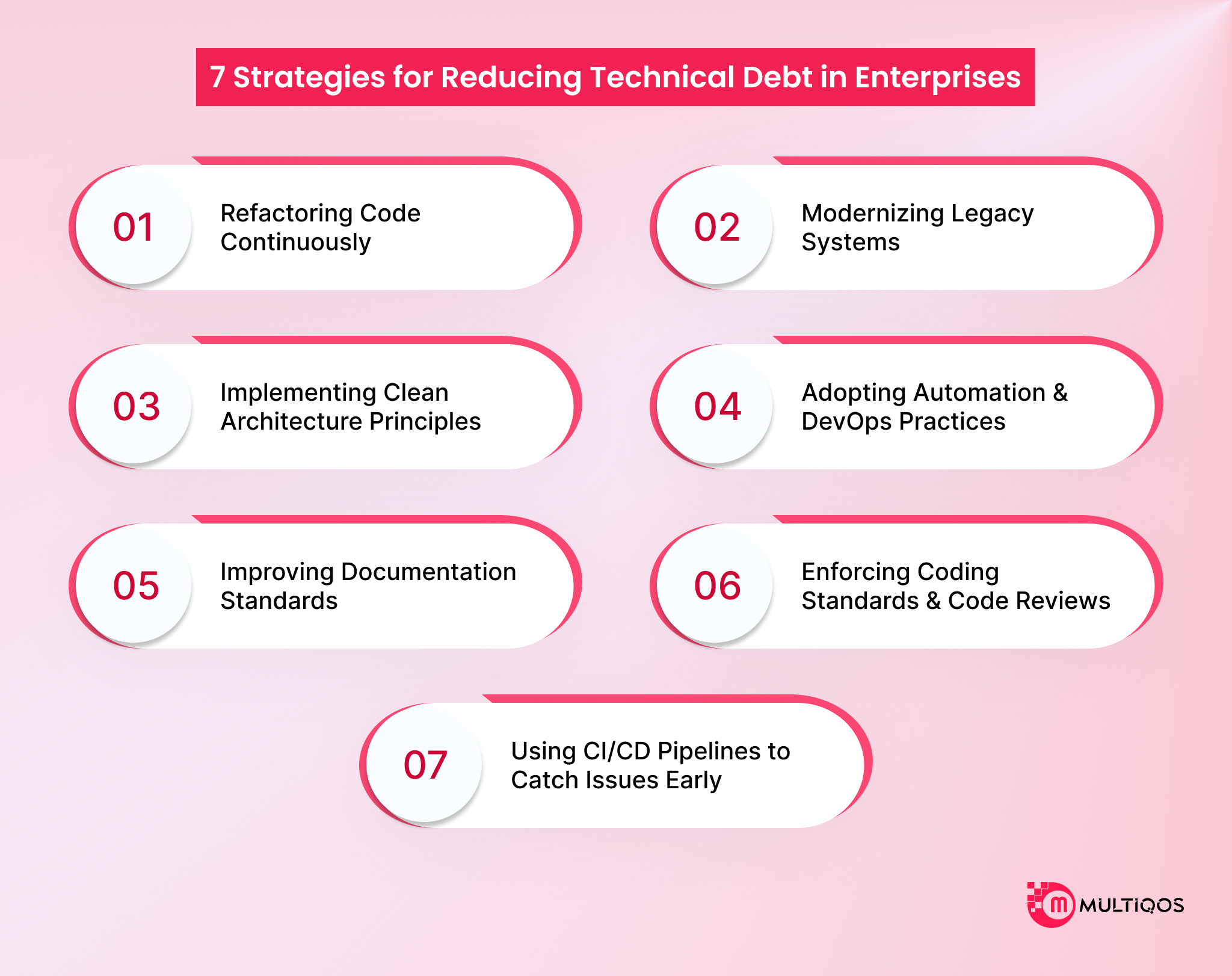
- 7 Strategies for Reducing Technical Debt in Enterprises
- Preventing Future Technical Debt
- How MultiQoS Helps Enterprises Reduce Technical Debt?
- Conclusion
- FAQs
Summary:
Reducing technical debt in enterprises is essential for maintaining long-term efficiency, stability, and innovation. This blog explores how organizations can identify hidden inefficiencies, modernize legacy systems, and implement proactive processes that prevent debt from piling up. It highlights practical strategies such as code refactoring, adopting automation, improving documentation, and integrating scalable architectures.
Leaders will also learn how to balance business demands with sustainable development practices. By prioritizing reducing technical debt in enterprises, businesses can enhance performance, lower maintenance costs, and create a strong foundation for continuous digital transformation and future growth.
Introduction
Enterprises often push to release new features quickly, but that speed can come at a hidden cost. Every shortcut, patch, or legacy platform carries the risk of accumulating inefficiencies that slow down future growth. In fact, a recent study found that the average global enterprise wastes more than US $370 million per year due to outdated systems and unresolved tech debt.
This post explores reducing technical debt in enterprises, how it impacts your systems, and the practical strategies you can use to transform technical debt from a liability into a controlled and manageable part of your growth journey.
Understanding Technical Debt in Enterprise Environments
Technical debt in enterprise environments refers to the accumulated cost of quick fixes, outdated systems, and suboptimal development practices that slow down innovation and increase long-term maintenance efforts. As enterprises scale, this debt becomes more visible through performance issues, rising operational costs, and reduced agility. Understanding what drives technical debt helps organizations take proactive steps to manage it before it impacts productivity and business outcomes.
Key points to understand:
- Technical debt builds up when teams prioritize speed over long-term code quality.
- Legacy systems contribute significantly to enterprise-wide technical debt.
- Poor documentation and inconsistent coding practices make maintenance more difficult.
- Lack of automated testing leads to recurring bugs and higher rework costs.
- Rapid business expansion without scalable architecture increases future debt.
- Ignoring technical debt affects system reliability, user experience, and innovation velocity.
7 Strategies for Reducing Technical Debt in Enterprises
Reducing technical debt in enterprises requires a proactive, structured approach that balances immediate business needs with long-term system health. By focusing on cleaner code, modern technologies, and consistent engineering practices, organizations can maintain agility while preventing technical issues from piling up. These strategies help teams deliver better software faster, minimize risks, and create a sustainable development environment.
1. Refactoring Code Continuously
Continuous refactoring keeps the codebase clean, modular, and easy to maintain. By improving naming conventions, removing duplicate logic, and simplifying complex functions, teams can significantly lower future rework. This is one of the most reliable methods for reducing hidden complexity before it becomes costly.
2. Modernizing Legacy Systems
Enterprises often rely on outdated systems that limit scalability and slow down innovation. Migrating to modern frameworks, cloud platforms, or microservices enhances flexibility and performance. This shift is essential for reducing technical debt in enterprises that still depend on monolithic or old-fashioned architectures.
3. Implementing Clean Architecture Principles
Clean Architecture separates business logic from external dependencies, making systems more adaptable and less fragile. This structure allows teams to upgrade components without affecting the entire application, supporting long-term maintainability and reducing technical debt in enterprises dealing with large, interconnected systems.
4. Adopting Automation & DevOps Practices
Automation tools and DevOps practices streamline development by reducing manual errors and ensuring consistent workflows. Automated testing, infrastructure-as-code, and real-time monitoring help teams detect issues early, speed up deployments, and prevent repetitive tasks that often contribute to technical debt.
5. Improving Documentation Standards
Well-organized documentation helps developers quickly understand system behavior, reducing onboarding time and preventing misinterpretations. Clear API references, architecture diagrams, and process guidelines ensure smoother development cycles and reduce the chances of developers introducing costly mistakes.
6. Enforcing Coding Standards & Code Reviews
Standardized coding guidelines and peer reviews lead to a more uniform and reliable codebase. These practices promote knowledge sharing, catch bugs before they move forward in the pipeline, and maintain a consistent level of quality across teams, critical for reducing technical debt in enterprises with distributed or large engineering teams.
7. Using CI/CD Pipelines to Catch Issues Early
CI/CD pipelines integrate automated builds, tests, and deployments, providing rapid feedback on code changes. This early detection helps developers fix issues before they escalate, ensuring smoother releases and reducing technical debt in enterprises aiming for continuous and reliable delivery.
Preventing Future Technical Debt
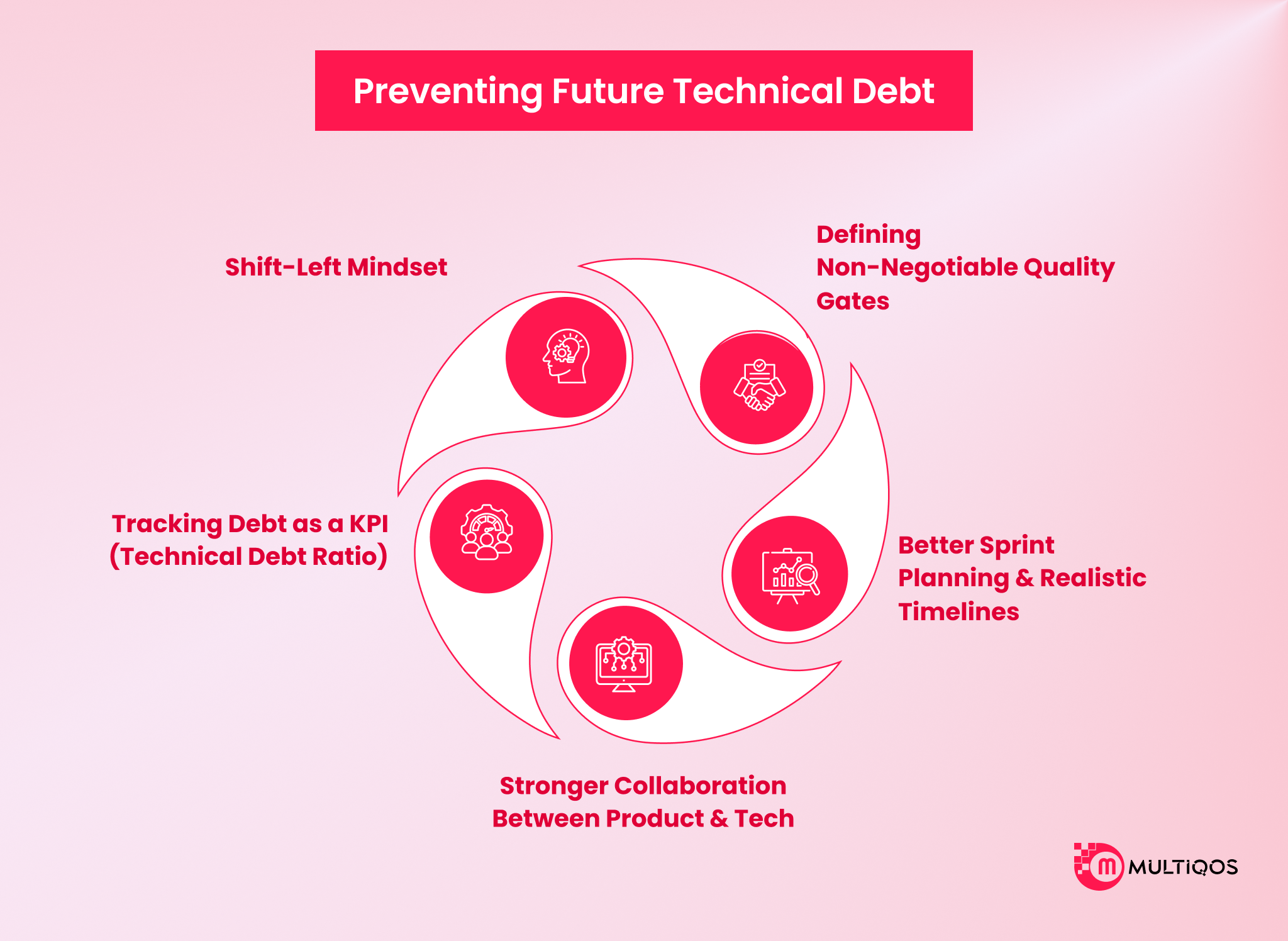
Preventing future technical debt requires a forward-thinking engineering culture where quality, clarity, and collaboration guide every stage of development. By embedding best practices early in the process, teams can avoid rushed decisions, reduce rework, and maintain system health as the organization grows.
1. Shift-Left Mindset
A shift-left approach moves testing, code reviews, and quality checks earlier in the development cycle. This prevents defects from reaching later stages, where they become more expensive and harder to fix.
2. Defining Non-Negotiable Quality Gates
Establishing mandatory quality gates, such as automated test coverage, performance thresholds, and code review approvals, ensures that only stable, compliant code moves forward. This maintains consistency and protects the system from long-term issues.
3. Better Sprint Planning & Realistic Timelines
When teams estimate work accurately and avoid overloading sprints, they minimize shortcuts that typically lead to technical debt. Realistic timelines support thoughtful development rather than rushed, low-quality implementations.
4. Stronger Collaboration Between Product & Tech
Close alignment between product managers and engineering teams ensures that decisions consider both business goals and technical implications. This collaboration prevents unnecessary compromises that create long-term system challenges.
5. Tracking Debt as a KPI (Technical Debt Ratio)
Measuring technical debt as a key performance indicator helps teams stay aware of system health and address issues before they escalate. Regular monitoring keeps everyone accountable and enables proactive improvement, an approach commonly followed by any strong enterprise software development company.

How MultiQoS Helps Enterprises Reduce Technical Debt?
MultiQoS supports organizations in building scalable, maintainable, and future-ready systems by combining strong engineering practices with modern technologies. Their approach focuses on long-term stability rather than quick fixes, ensuring that every solution aligns with business goals while strengthening technical foundations.
With expertise in delivering high-quality application development services, MultiQoS plays a key role in reducing technical debt in enterprises through strategic planning, continuous optimization, and proactive quality management.
How MultiQoS makes it easier for enterprises:
- Conducts comprehensive audits to identify hidden technical debt and system bottlenecks.
- Modernizes legacy platforms with cloud-native architectures and modular designs.
- Implements strict coding standards and automated testing frameworks.
- Ensures consistent documentation and clear development workflows.
- Establishes CI/CD pipelines to improve deployment speed and reduce errors.
- Provides dedicated teams for long-term system maintenance and optimization.
- Aligns product and engineering teams to ensure scalable, high-quality delivery.
Conclusion
Reducing technical debt in enterprises is not a one-time effort but an ongoing commitment to building cleaner, more resilient, and future-ready systems. By investing in modern architecture, continuous optimization, and disciplined engineering practices, organizations can unlock higher productivity, better performance, and long-term stability.
And when specialized expertise is needed, partnering with the right talent becomes essential. Choosing to hire dedicated developers can accelerate modernization, strengthen code quality, and ensure sustainable growth. With the right strategy and team in place, businesses can confidently move forward with a stronger, more scalable digital foundation.
FAQs
It improves system stability, decreases maintenance costs, enhances productivity, and enables faster innovation by removing blockers within the tech infrastructure.
Legacy systems often lack scalability, integrate poorly with modern tools, and require extensive manual maintenance, leading to higher operational costs and inefficiencies.
Key approaches include refactoring code, modernizing legacy platforms, enforcing coding standards, automating testing, and implementing CI/CD pipelines.
DevOps encourages automation, continuous testing, and quicker feedback loops, all of which reduce errors and prevent technical debt from accumulating.
By adopting a shift-left mindset, implementing quality gates, improving sprint planning, and maintaining strong collaboration between tech and product teams.
Yes. Partnering with experienced developers or external tech teams can accelerate modernization, improve code quality, and provide specialized skills needed to manage complex systems.

Get In Touch

Get Stories in Your Inbox Thrice a Month.