Why Ethical Use of User Data in Software Matters More Than Ever
Table of Content:
- Introduction
- What Ethical Use of User Data Really Means?
- Why Ethical Data Use Matters More Than Ever?
- Best Practices for Ensuring Ethical Use of User Data
- Conclusion
- FAQs
Summary
Software relies heavily on personal data to deliver smarter, faster, and more personalized experiences. This makes the ethical use of user data in software more important than ever. When data is collected and used responsibly, it builds trust, protects user privacy, and reduces the risk of misuse or bias.
Ethical practices also help companies stay compliant with data protection laws and avoid long-term reputational damage. As users become more aware of how their information is handled, they expect transparency, consent, and security. Prioritizing ethical data use isn’t just a legal need, it’s a commitment to respect users and create software people can truly trust.
Introduction
Every time someone clicks a button, scrolls a screen, or signs up for an app, they leave behind a trail of personal data. That’s why the ethical use of user data in software is no longer just a best practice; it’s a real responsibility. People trust apps and digital platforms with sensitive details like their location, contacts, habits, and preferences, expecting that information to be treated with care.
But that trust doesn’t come easily anymore. Studies show that 86% of people in the US are concerned about data privacy, and 60% believe companies often misuse personal data, which sends a clear message to businesses building digital products.
As software becomes deeply woven into how we work, shop, and connect, ethical data practices go far beyond checking regulatory boxes. They’re about respecting users, earning trust over time, and creating technology people genuinely feel safe using. In this blog, we’ll explore why responsible data use matters more than ever and how it can actually become a competitive advantage instead of a compliance burden.
What Ethical Use of User Data Really Means?
Ethical use of user data in software goes far beyond ticking compliance checkboxes or publishing lengthy privacy policies that few people read. Within ethical software development, it means being honest about what data is collected, why it’s needed, and how it benefits the user. It’s about treating user information with respect, limiting data collection to what’s truly necessary, and ensuring that privacy is built into the product from the start, not added as an afterthought. When data is handled responsibly, it strengthens trust and reinforces the idea that software is designed to serve users, not exploit them.
Key principles of ethical data use include:
- Collecting only the data required for core functionality
- Being transparent and upfront about data usage and storage
- Giving users meaningful control over their personal information
- Protecting data through strong security and access controls
- Avoiding manipulative design practices or hidden data sharing
- Aligning data practices with the broader goals of ethical software development

Why Ethical Data Use Matters More Than Ever?
The conversation around data privacy has shifted dramatically in recent years. What was once seen as a technical or legal concern is now a core business priority. The ethical use of user data in software has become essential as users, regulators, and technologies evolve, placing greater responsibility on how digital products collect, process, and protect personal information.
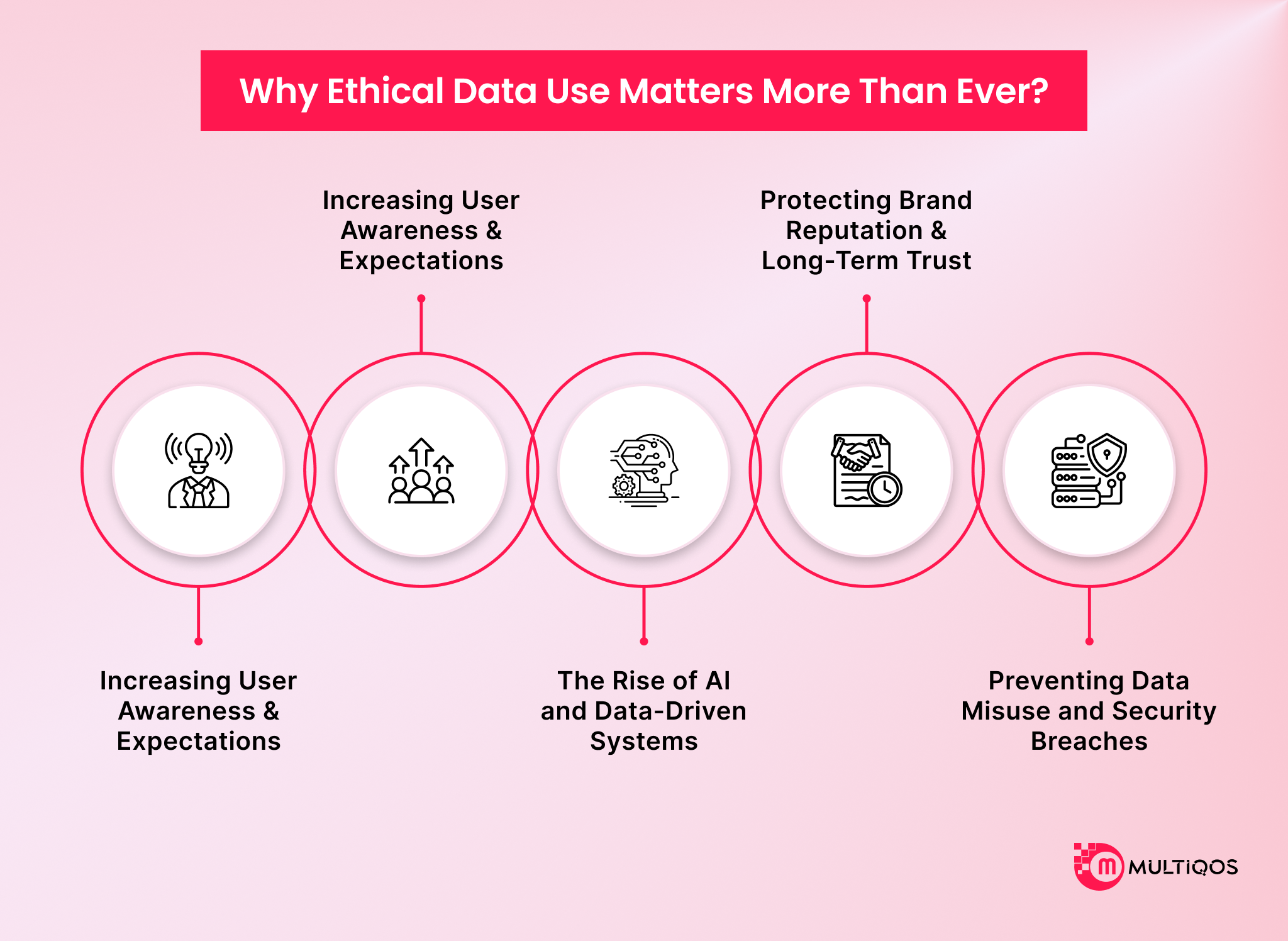
1. Increasing User Awareness & Expectations
Today’s users are far more informed about how their data is collected and used. They read consent prompts, question permissions, and expect transparency from the apps they use every day. The ethical use of user data in software helps meet these expectations by ensuring honesty, clarity, and respect for user choices, which directly impacts user adoption and loyalty.
2. Growing Regulatory Pressure (GDPR, CCPA, etc.)
Global regulations like GDPR and CCPA have raised the bar for data protection and accountability. Non-compliance can lead to heavy fines and legal consequences, but ethical data practices go beyond avoiding penalties. By embedding ethics into data handling, organizations create systems that are compliant by design and resilient to future regulatory changes.
3. The Rise of AI and Data-Driven Systems
AI-powered applications rely heavily on user data to learn, adapt, and make decisions. Without clear ethical boundaries, these systems risk bias, misuse, or unintended harm. Integrating ethical principles into AI development ensures that user data is handled responsibly, training data is sourced legitimately, and user rights are respected throughout automated decision-making processes.
4. Protecting Brand Reputation & Long-Term Trust
Trust is one of the most valuable assets a brand can have, and it’s also one of the easiest to lose. Companies offering software development services are increasingly judged not just by what they build, but by how responsibly they handle user data. Ethical data practices help protect brand reputation, strengthen credibility, and build long-term relationships with users.
5. Preventing Data Misuse and Security Breaches
Poor data practices increase the risk of leaks, breaches, and unauthorized access. Ethical data use emphasizes secure storage, controlled access, and responsible sharing. Ultimately, the ethical use of user data in software reduces the likelihood of misuse while safeguarding both users and the business from long-term damage.

Best Practices for Ensuring Ethical Use of User Data
Ensuring the ethical use of user data in software requires more than policies and promises. It demands intentional design decisions, responsible engineering, and a user-first mindset throughout the development lifecycle. As digital products become increasingly data-driven, these best practices enable organizations to build trust while aligning with modern expectations and regulations.
1. Build Transparency from Day One
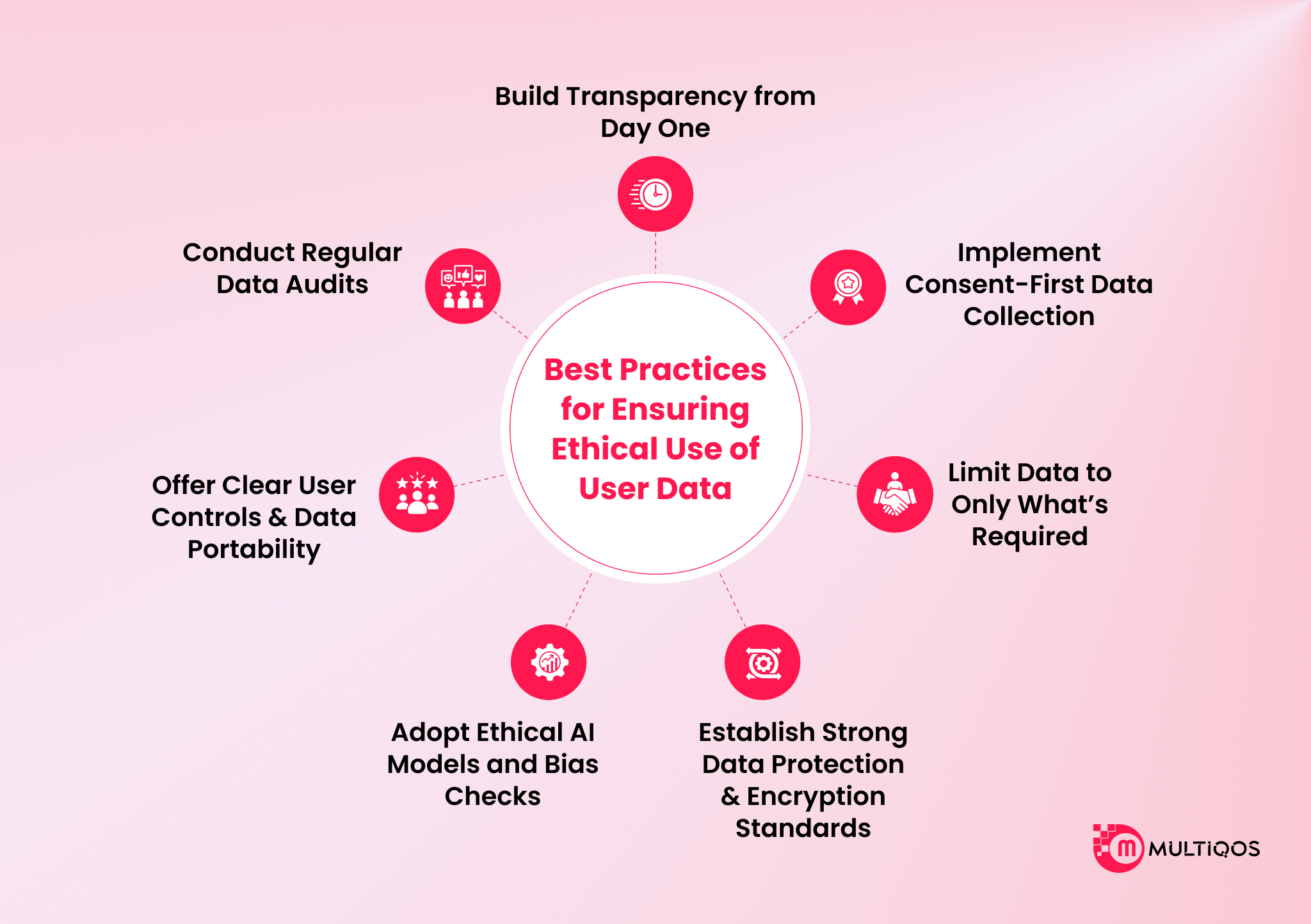
Transparency should be embedded from the earliest stages of product design. Clearly explain what data is collected, why it’s needed, and how it benefits the user. When transparency is proactive rather than reactive, users feel informed instead of monitored, reinforcing the ethical use of user data in software.
2. Implement Consent-First Data Collection
User consent should be explicit, informed, and easily managed. Avoid pre-checked boxes or confusing opt-ins. A consent-first approach ensures users are active participants in data sharing, which is foundational in today’s new era of software development.
3. Limit Data to Only What’s Required
Collecting excessive data increases risk and erodes trust. Ethical data practices focus on gathering only what is essential for functionality or improvement. This minimizes exposure while supporting the ethical use of user data in software across systems.
4. Establish Strong Data Protection & Encryption Standards
Data security is a non-negotiable part of ethical responsibility. Implement robust encryption, access controls, and secure storage methods to protect user information from breaches, leaks, and unauthorized access.
5. Adopt Ethical AI Models and Bias Checks
AI systems should be trained and monitored to avoid biased outcomes or discriminatory behavior. Regular bias testing, explainable models, and responsible training data help ensure fairness and accountability in automated decisions.
6. Offer Clear User Controls & Data Portability
Users should be able to view, update, download, or delete their data without friction. Clear controls empower users and demonstrate respect for their ownership over personal information.
7. Conduct Regular Data Audits
Ongoing audits help identify unnecessary data collection, outdated permissions, or potential vulnerabilities. Regular reviews ensure that data practices stay aligned with ethical standards, evolving regulations, and the long-term ethical use of user data in software.
Conclusion
Ethical use of user data in software is no longer something businesses can treat as optional or secondary. As people become more aware of how their personal information is collected and used, trust has become just as important as functionality. Software that respects user privacy, stays transparent, and protects data responsibly is far more likely to earn long-term loyalty.
Moving forward, companies that make ethical data practices a core part of their products will stand out in a crowded digital space. Whether you’re building a new application or improving an existing one, working with the right mindset and the right people matters. When organizations choose to hire software developers who value ethics alongside innovation, they don’t just build better software; they build trust that lasts.
FAQs
It helps protect user trust, prevents data misuse, reduces legal risks, and ensures software systems are fair and unbiased.
Unethical practices can lead to privacy violations, identity theft, biased decisions, and loss of control over personal information.
Examples include collecting data without consent, selling user data, weak security measures, and using data beyond its original purpose.
By following data protection laws, being transparent about data usage, limiting data collection, and implementing strong security controls.
Many regulations like GDPR and CCPA require responsible data handling, but ethical use goes beyond legal compliance.
When users know their data is handled responsibly, they feel safer and are more likely to stay loyal to the product.

Get In Touch

Get Stories in Your Inbox Thrice a Month.
Legacy Application Modernization: Meaning, Benefits, Approaches & Use Cases

Managing Distributed Development Teams: Strategies to Improve Collaboration