AI Warehouse Management System (WMS) to Improve Inventory Accuracy and Reduce Errors
MultiQoS offers an AI-based warehouse management system that brings inventory, procurement, and warehouse tasks together in one place. It gives clear, real-time updates, streamlines daily work, and helps teams manage operations more efficiently.


Warehouse operations move with complete context at every step. When teams process Purchase Orders (PO), Inbound, GRN, Transfers, or Collection Notes, item details, quantities, and locations are captured in real time. This ensures the right information reaches the right user instantly, improving execution speed and reducing delays.
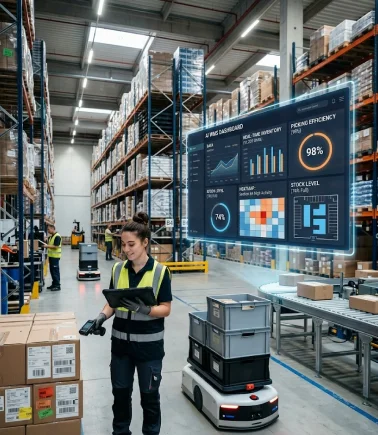
Solution Overview
AI Warehouse Management System (WMS) Built for Daily Warehouse Execution
MultiQoS offers an AI-powered warehouse management system built to manage daily warehouse operations in one place. It cuts down a lot of manual work in the warehouse. Teams can handle things like purchase orders, GRN, storage, transfers, and collections step by step, and everything gets updated at the same time. So the stock details stay clear and easy to track.
There’s no need to jump between different tools or keep separate Excel sheets, because everything is in one place with roles, locations, and alerts. Overall, it just makes daily work simpler and easier to manage.
The system also supports warehouse AI solutions through forecasting and anomaly detection, helping teams react faster and manage operations with greater control.
Features
Core Capabilities of Our AI Warehouse Management System (WMS)
Our system helps teams track inventory, manage workflows, and make faster decisions with better accuracy across warehouse operations.
Item & Inventory Management
Manage item data and track stock across warehouses with live updates for every movement, including dead stock, slow-moving inventory, and AI-based demand prediction.
Warehouse Structure Setup
Set up zones, racks, and bins to organize storage and maintain better control across warehouse areas.
PO & GRN Processing
Manage purchase orders and GRNs while tracking received, missing, and approved items with AI anomaly detection in quantity mismatches before updating stock.
Transfer & Movement Tracking
Track item movement across warehouses, vendors, and projects with complete visibility and real-time updates using AI-based transfer optimization.

Collection Notes Management
Handle outbound workflows through item preparation, verification, and dispatch using approval-based processes with AI dispatch readiness insights.
Assembled Items Management
Combine multiple items into a single unit for easier handling and simplified inventory management.
Project-Based Inventory Management
Track stock at the project level with visibility into allocated, reserved, and available quantities using AI allocation suggestions.
Operations, Reports & Notifications
Monitor warehouse operations through reports, audit logs, and real-time notifications with automated workflow updates and AI exception alerts.
Industry Challenges
Challenges in the legacy warehouse management system
Most warehouse systems were designed just to track inventory, not to handle how fast and complex operations are today, especially across multiple locations. As warehouses grow, managing everything manually and using disconnected systems starts causing delays, wrong data, and less control over daily operations.

Fragmented Warehouse Systems
Many warehouses still depend on spreadsheets, ERP systems, and manual records. Since these systems don’t connect properly, information gets spread across different teams, making it difficult to get a clear and complete view of daily operations.
Delayed Inventory Updates
Stock movement from inbound, outbound, or transfers doesn’t always reflect instantly in systems. Because of this delay, teams often work with outdated information and make decisions based on incorrect information.
Manual Verification in PO and GRN
Procurement and inbound checks still rely heavily on manual validation. Teams repeatedly verify quantities, match documents, and correct entries, which slows down the entire receiving process.
Poor Warehouse Structure
Many warehouses still don’t follow a proper layout system. Without clear zones, racks, or bin-level organization, items end up scattered, making storage inefficient and retrieval time longer.
Weak Traceability of Stock Movement
Once inventory moves across warehouses, vendors, or projects, tracking its full journey becomes difficult. Historical movement is often incomplete, which creates issues during audits and investigations.
Disconnected Outbound Workflow
Picking, checking, packing, and dispatching are often handled as separate steps. Since these activities are not tightly connected, delays happen during order fulfillment, and vendor coordination becomes harder.

Pain Points
What Is the Impact of Inefficient Warehouse Operations?
Warehouse issues don’t just affect one area. When processes break down, the impact shows across inventory, procurement, storage, and dispatch. This leads to delays, incorrect data, and less control over daily operations.

Inventory Mismatch
Teams work with outdated stock data when inventory does not update with real-time movement. This leads to planning errors, incorrect allocation, and delays during operations.
Manual Procurement Delays
Purchase Orders and GRNs go through multiple manual checks and approvals. This slows inbound processing and delays stock availability for operational use.
Repeated Operational Errors
Errors in GRN entries, transfers, or inventory updates force teams to repeat the same tasks. This increases the workload and slows down overall execution.
Limited Real-Time Visibility
Teams lack a single real-time view of inventory, movement, and workflows. This reduces decision speed and affects accuracy during daily operations.
Poor Storage Organization
Without clear zones, racks, and bins, teams struggle to locate items. This increases retrieval time and reduces overall storage efficiency.

Disconnected Dispatch Flow
Picking, packing, verification, and dispatch run without proper coordination. This slows execution and creates delays in order fulfillment.
Ready to Improve Your Warehouse Operations?
Stop dealing with inventory issues and delayed updates. MultiQoS connects all warehouse processes into one smooth flow with real-time visibility and control.
Speak to Our Experts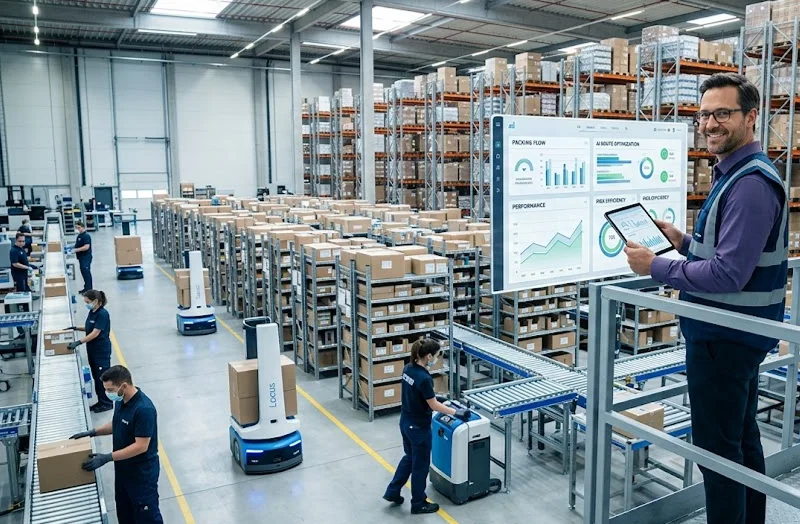
Key Benefits
What Businesses Gain From an AI-Powered Warehouse Management System
A connected warehouse setup simplifies daily operations by bringing everything into one place and reducing manual coordination.
Inventory stays reliable during real operations
Stock updates reflect movement as it happens, so teams don’t end up working on outdated numbers. This reduces confusion during planning and keeps execution aligned with actual availability.
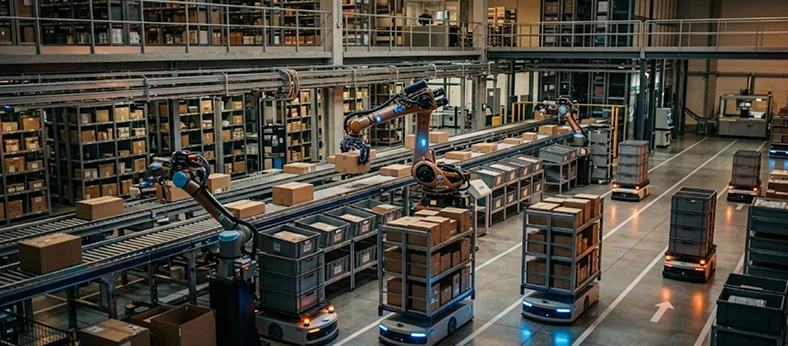
Work moves faster between warehouse stages
From purchase orders to inbound checks, storage, transfers, and dispatch, tasks don’t sit idle between steps. The flow becomes more continuous, which helps reduce waiting time in operations.
Teams spend less time fixing mistakes
When data is entered or updated across workflows like GRN or transfers, errors don’t pile up silently. This reduces repeated corrections and keeps operations from getting stuck in rework cycles.
Space inside the warehouse is used more logically
Items are placed in a more structured way instead of random storage decisions. This makes it easier to locate goods and reduces time wasted during picking.
Project stock becomes easier to follow
Teams can clearly see what belongs to which project and how much has been used. This avoids confusion when multiple projects run at the same time.
Every movement is traceable when needed
Whether items move between warehouses, vendors, or projects, the flow stays recorded. This makes tracking and audits much easier when questions come up later.
How It Works
How Our Approach Works: From Purchase to Dispatch
Warehouse operations follow a continuous flow from ordering items to storing, tracking, and dispatching them. Each step updates records and keeps information accurate across activities.
Use Cases
Practical Use Cases of Warehouse Management System
Inventory Tracking Across Multiple Warehouses
Track stock across different warehouse locations with updated records. This helps avoid mismatches and gives a clearer view of actual stock availability.
Inbound Handling with PO and GRN
Manage incoming items from purchase orders to GRN verification. Record received, missing, or rejected quantities clearly before updating inventory.
Warehouse Storage Organization
Organize items using zones, racks, and bins to maintain structured storage. This makes it easier to locate items and reduces the time spent during handling.
Inventory Transfer Between Locations
Move items across warehouses, vendors, or project sites while keeping stock updated. This maintains visibility and helps track movement without confusion.
Project-Based Inventory Allocation
Assign inventory to specific projects and track how much stock is used or available. This helps manage allocation across multiple ongoing projects.
Outbound and Dispatch Management
Manage picking, verification, and dispatch through a defined flow. This keeps outbound operations consistent and reduces delays during order handling.
Build a smarter, faster, and scalable warehouse.
Let's ConnectBusiness Impact
Measurable Impact on Your Warehouse Operations
Our warehouse management system improves accuracy, speeds up daily work, and reduces manual effort across inventory, storage, and dispatch activities.
Improved Inventory Accuracy
The system updates stock during every movement, so records match actual availability and reduce mismatches during operations.
Faster Inbound and Processing
Structured PO and GRN flows move work forward without delays and make incoming stock available for use sooner.
Reduced Operational Effort
Connected workflows cut down repeated entries and corrections, so work moves ahead without extra manual effort.
Faster Dispatch and Fulfillment
Picking, verification, and dispatch follow a smoother flow, helping orders move out faster and with fewer delays.

Integration
Seamless Warehouse System Integration
MultiQoS connects with your existing tools and keeps inventory, procurement, and dispatch data in one smooth flow without disrupting operations.
ERP System Connectivity
The system connects with ERP platforms to keep purchase orders, inventory records, and warehouse updates aligned across all operations.
Unified Data Flow Across Modules
Inventory, GRN, transfers, and dispatch activities stay linked in one system, so updates reflect instantly without manual syncing.
Multi-Warehouse Coordination
All warehouse locations operate in a connected environment, allowing smooth tracking of stock movement and availability across sites.
Real-Time Synchronization
Every update in inventory or movement is reflected immediately in the system, ensuring teams always work with current data.

Why Choose Us
Why Partner with MultiQoS?
MultiQoS builds warehouse management systems that focus on real operational needs instead of complex software layers. We design solutions that help teams manage inventory, movement, and dispatch with clarity and control in daily work.

Built for real warehouse operations
We design every module around actual warehouse workflows, so teams can handle inventory, procurement, storage, and dispatch without confusion.
Simple and practical system design
We keep the system easy to use so teams can complete daily tasks faster without dealing with unnecessary complexity.
Smooth setup with existing processes
The system fits into your current warehouse structure and supports operations without forcing major changes in workflow.
Gives clear operational visibility
Live updates help teams understand what is happening with stock, movement, and dispatch at any point in time.
FAQs