How MultiQoS Cut Inventory Costs 37% and Stockouts 92% for a $250M Fulfilment Centre
MultiQoS developed an AI-driven inventory management system that connects demand planning, inventory tracking, and warehouse operations into a single platform. It gives teams real-time visibility across fulfilment centres and helps manage stock movement, replenishment, and order flow more efficiently.
Request a Consultation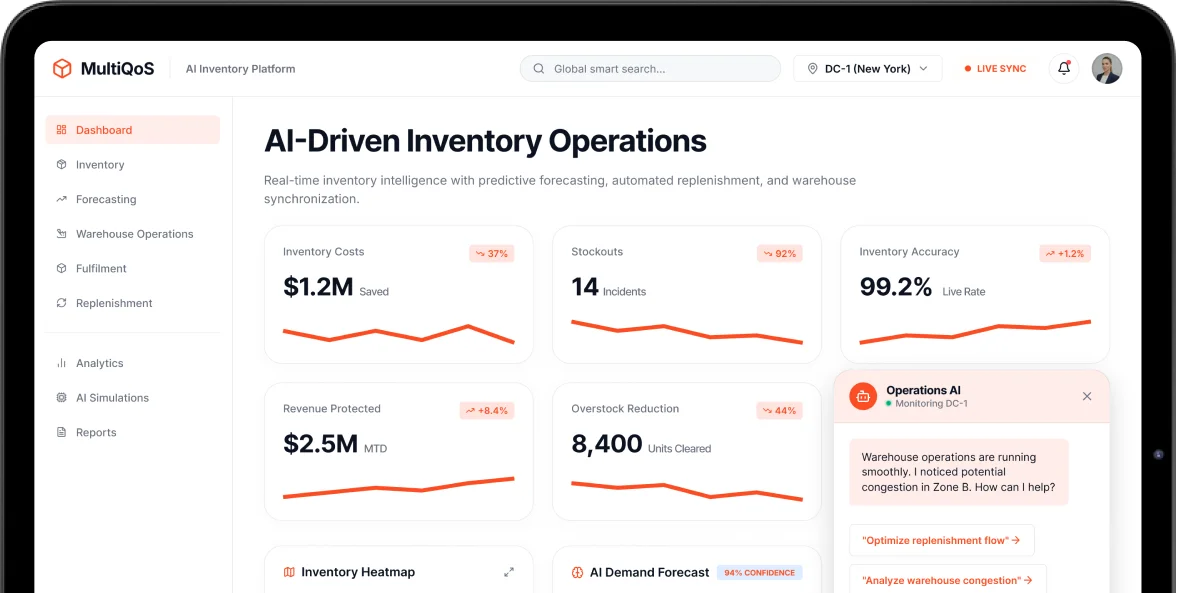
AI-Driven Inventory Management Solution for E-Commerce Fulfilment
The client previously struggled with stock mismatches, delayed decisions, and weak coordination due to manual tracking and disconnected systems. MultiQoS implemented a solution that used predictive inventory analytics to streamline operations. This led to a 37% reduction in inventory costs, 99%+ stock-level accuracy, and a 92% reduction in stockouts, thereby improving speed and control of fulfilment operations.
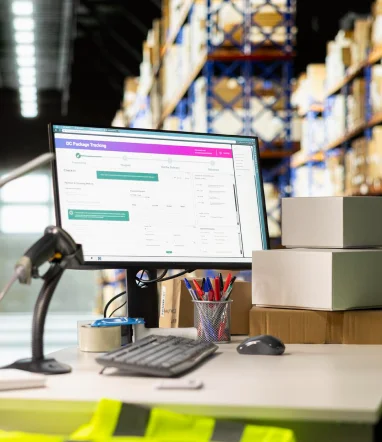
Real-Time Inventory Visibility
Automated Replenishment
Inventory Insights Dashboard
Warehouse Operations Integration
The Challenges Client Faced
The client operated a $250M e-commerce fulfilment centre processing nearly 1M orders per month. Despite the scale, their e-commerce fulfilment inventory management was driven by a basic WMS and periodic stock counts across two distribution centres managing 50,000 SKUs. This resulted in limited visibility, delayed decision-making, and poor coordination across operations.
Operational Tracking Errors
Manual picking and rushed replenishment cycles led to 12% operational errors, impacting stock reliability and slowing fulfilment processes.

Rising Operational Costs
Inefficient operations increased carrying costs by $3.2M annually, including $1.1M in obsolescence, increasing margin pressure due to limited AI inventory optimization.
Inventory Stock Imbalance
The client faced 18% stockouts and 22% overstock due to demand volatility and inconsistent forecasting across locations.

Weak Inventory Control System
Legacy barcode systems failed to support smart inventory control, especially during peak demand spikes, making inventory management reactive instead of data-driven.
How We Built the AI-Driven Inventory Management System
We followed a structured approach to fix inventory inefficiencies across a $250M fulfilment operation. The goal was to connect disconnected systems, reduce forecasting errors, and improve real-time control over stock movement.
Discovery
2 Weeks
Reviewed WMS and sales data through API analysis
Studied inventory movement across two DCs
Identified forecasting gaps causing excess stock
Mapped workflows for 50,000 SKUs
Audited barcode and warehouse processes
Found delays in replenishment planning
Built a unified inventory management platform
Developed ML models for demand forecasting
Integrated GenAI for inventory simulations
Connected ERP and WMS systems using Kafka
Enabled IoT-based bin-level inventory tracking
Created real-time inventory monitoring dashboards
7 Weeks
DEVELOPMENT
DELIVERY
3 Weeks
Deployed the system across fulfilment centres
Ran shadow operations for live validation
Tested inventory workflows during peak demand
Trained 150 warehouse and operations users
Improved adoption through guided onboarding
Delivered one-month post-launch support
Discovery
2 Weeks
Reviewed WMS and sales data through API analysis
Studied inventory movement across two DCs
Identified forecasting gaps causing excess stock
Mapped workflows for 50,000 SKUs
Audited barcode and warehouse processes
Found delays in replenishment planning
DEVELOPMENT
7 Weeks
Built a unified inventory management platform
Developed ML models for demand forecasting
Integrated GenAI for inventory simulations
Connected ERP and WMS systems using Kafka
Enabled IoT-based bin-level inventory tracking
Created real-time inventory monitoring dashboards
DELIVERY
3 Weeks
Deployed the system across fulfilment centres
Ran shadow operations for live validation
Tested inventory workflows during peak demand
Trained 150 warehouse and operations users
Improved adoption through guided onboarding
Delivered one-month post-launch support
AI-powered inventory intelligence built for high-volume fulfilment centres.
Let’s Build Together
Core Features of the AI-Driven Inventory Management System
The system integrates inventory, demand, and warehouse operations into a single workflow. Teams track stock movement, understand changes, and act without waiting for reports.
Unified Inventory Data Layer
ERP and WMS data come together to give a clear, real-time view of inventory across both distribution centers. This removes gaps and improves stock visibility.
AI-Based Inventory Engine
The system studies sales patterns and demand trends to support better planning. It helps teams maintain balanced inventory levels when demand changes.
System Integration Framework

ERP and WMS systems connect and stay in sync. This keeps data consistent and removes manual updates.

Scenario Simulation Module
Teams test different demand and inventory scenarios before making decisions. This reduces guesswork and improves planning accuracy.
AI-Driven Inventory Management Across Fulfilment Operations
MultiQoS connected the ERP and WMS systems through Kafka, so stock updates moved directly between the warehouse and inventory systems. Teams could track inventory movement in real time instead of depending on manual updates and delayed stock counts. This improved day-to-day inventory control and supported AI-driven inventory management during fulfilment operations, helping teams respond faster during peak order periods.
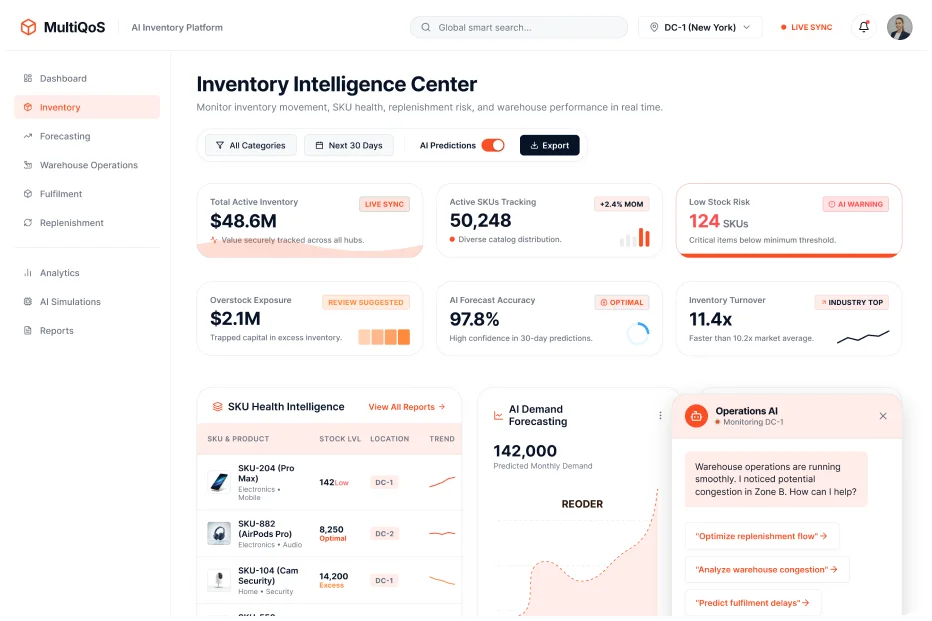
Delivering Inventory Control in Real Fulfillment Operations
The system was introduced into existing fulfilment workflows without changing daily warehouse processes. Inventory updates moved automatically between ERP and WMS systems, helping teams manage replenishment, stock allocation, and fulfilment activities with better coordination across distribution centers.
Faster Replenishment Planning
Teams identified inventory gaps earlier and planned replenishment more efficiently across warehouse operations.
Better Inventory Accuracy
Connected inventory updates reduced stock mismatches and maintained more reliable inventory records during daily operations.

Faster Peak Demand Response
Warehouse teams responded quickly to changing order volumes and inventory movement during peak fulfilment periods.
Stronger Inventory Control
The system helped operations teams maintain stable inventory handling across fulfilment workflows without depending on delayed stock updates or manual coordination.
Let’s Build Smarter Inventory Operations Together
Start Improving Inventory Accuracy Today
MultiQoS helps e-commerce businesses improve inventory planning and reduce operational inefficiencies across fulfilment operations. Our team builds AI-driven inventory management systems that support better stock control, faster replenishment decisions, and more accurate inventory handling across warehouse operations.
Contact Us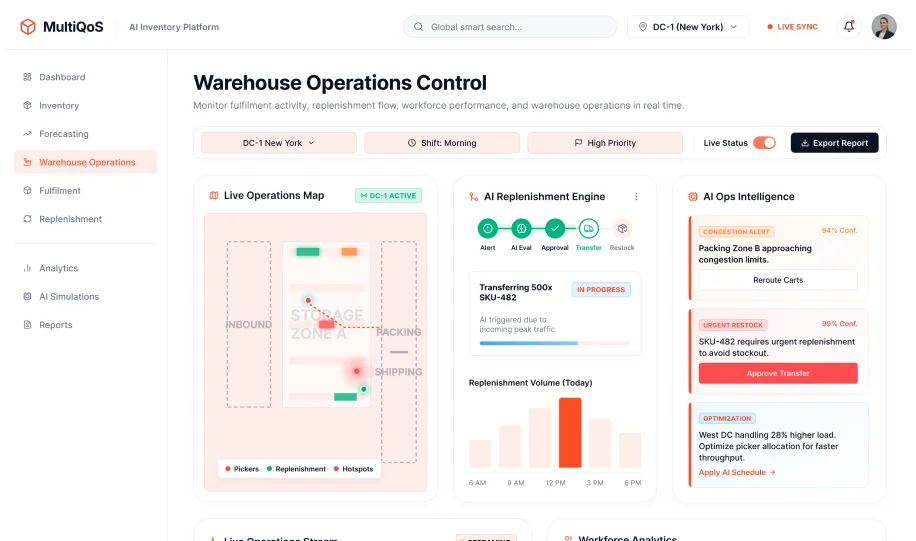
Real-Time Inventory Monitoring in Fulfillment Operations

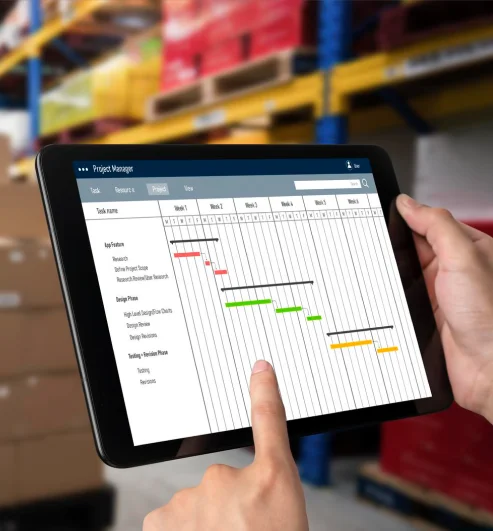

The client relied on periodic stock counts and disconnected warehouse updates, making it difficult to manage inventory accurately across two distribution centers handling 50,000 SKUs. MultiQoS connected ERP and WMS data through Kafka and enabled bin-level inventory tracking during fulfilment operations. This helped teams identify stock gaps and replenishment delays earlier, improving fulfilment performance while helping reduce stockouts and margin loss from excess inventory.
Measurable Results That Improved Inventory Performance
The system delivered measurable improvements across fulfilment operations by reducing costs, improving stock accuracy, and strengthening inventory control across distribution centers.
Reduction in Inventory Carrying Costs
Improved planning and better stock control reduced excess inventory and lowered overall carrying costs across fulfilment centers.
Pick Accuracy Achieved
System-driven tracking improved picking accuracy and reduced errors during high-volume operations.

Reduction in Stockouts
Stockouts decreased from 18% to 1.4%, ensuring better product availability and smoother order fulfilment.
Revenue Protected
Improved stock availability helped prevent lost sales and protected revenue across fulfilment operations.
Our Technology Stack
AI / Machine Learning
- Python
- LangChain
- OpenAI (GenAI simulation layer)
- scikit-learn
Backend
- Node.js
- PostgreSQL
- Apache Kafka (event streaming & sync layer)
Frontend / Web
- React
Mobile Application
- Flutter (warehouse operations app)
Analytics & Reporting
- Power BI (inventory dashboards & reporting layer)
Cloud & DevOps
- Microsoft Azure
IoT & Integration
- IoT bin sensors (real-time inventory tracking)
- ERP / WMS API integrations
Trusted by the Clients
Praising Voices Reflecting Our Dedicated Efforts
Client’s words are a testimonial to our commitment of delivering optimized business outcomes.

“Our vision was understood and they asked really detailed questions to find out what was required. A well-defined process was followed during the development process and the team captured requirements diligently. The team is also flexible enough to adjust to the schedule.”
CEO - Gameday Guide

“I am highly satisfied with their work. Our collaboration is seamless, and we have regular discussions with their developers to define tasks and ensure progress. We were particularly impressed with their excellent communication skills.”
Founder - Screeners Berlin

“I had the pleasure of working with a team that not only demonstrated exceptional punctuality but also made the entire experience enjoyable. Their commitment to timeliness was commendable, ensuring deadlines were met.”
Founder - Michael John Norton

“It's rewarding to work with a diligent and dedicated team. Excellent guys to work with! Always listened to my thoughts and came up with creative design solutions. Whenever you need them, they are available and eager to share their knowledge.”
CEO - Polished
FAQs
Frequently Asked Questions
How does the system help with stock issues?
Can it handle large volumes of orders and SKUs?
How quickly can teams act on inventory changes?
Will we need to change our current systems?
How do teams check what’s happening with inventory?
Our Blog
Latest Insights
Keep up with the fast-paced world of technology through our expert research on current trends and innovations.