What are AI agents for Fraud Detection and Investigation?
Why is Advanced Fraud Detection Becoming the Call of the Hour?
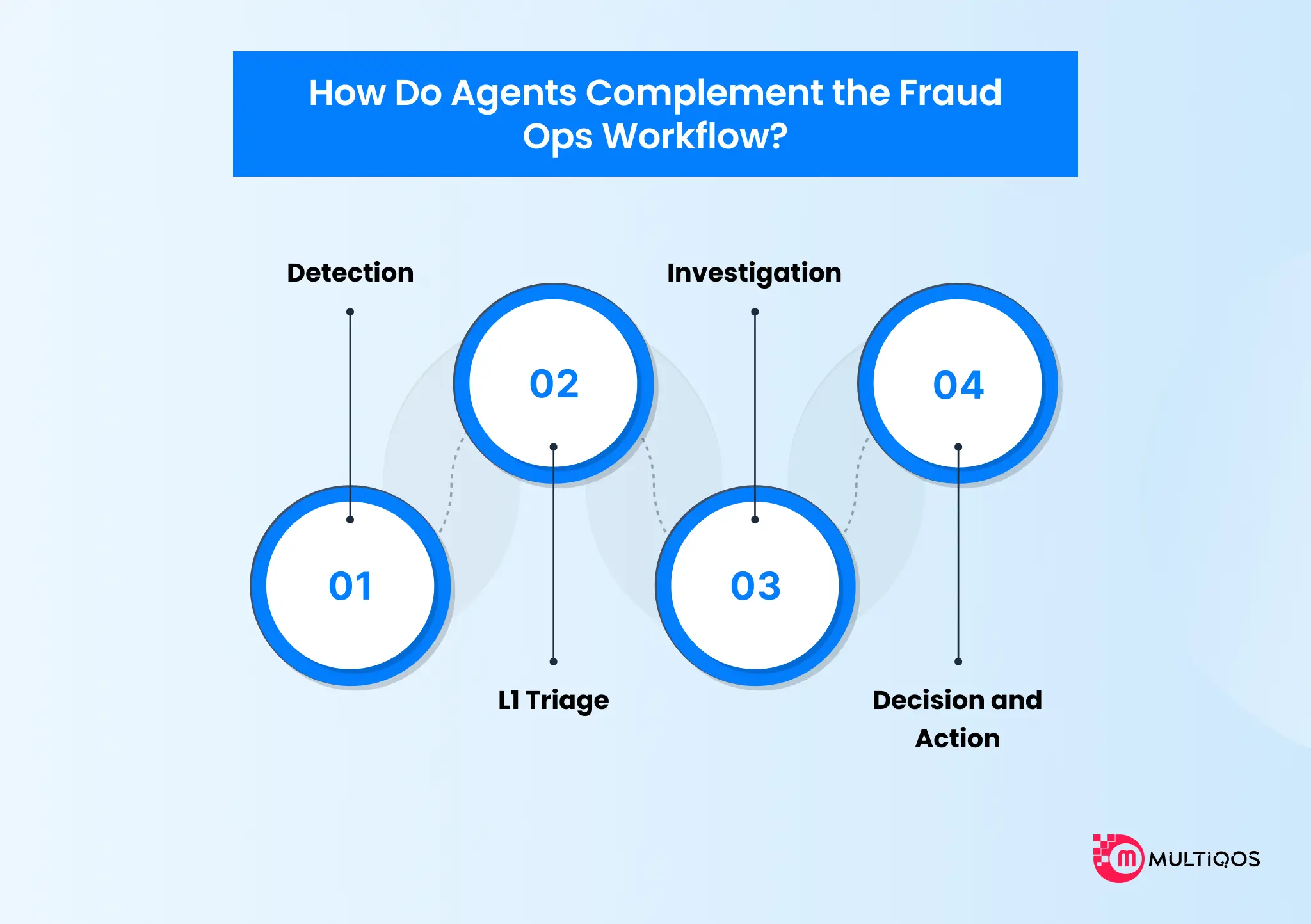
How Do Agents Complement the Fraud Ops Workflow?
AI Agents in Fraud Detection: Key Components
AI Agents in Fraud Detection: Core Features
AI Agents vs Traditional Agents: Key Differences Explained
Types of Frauds Detected by the AI Agents
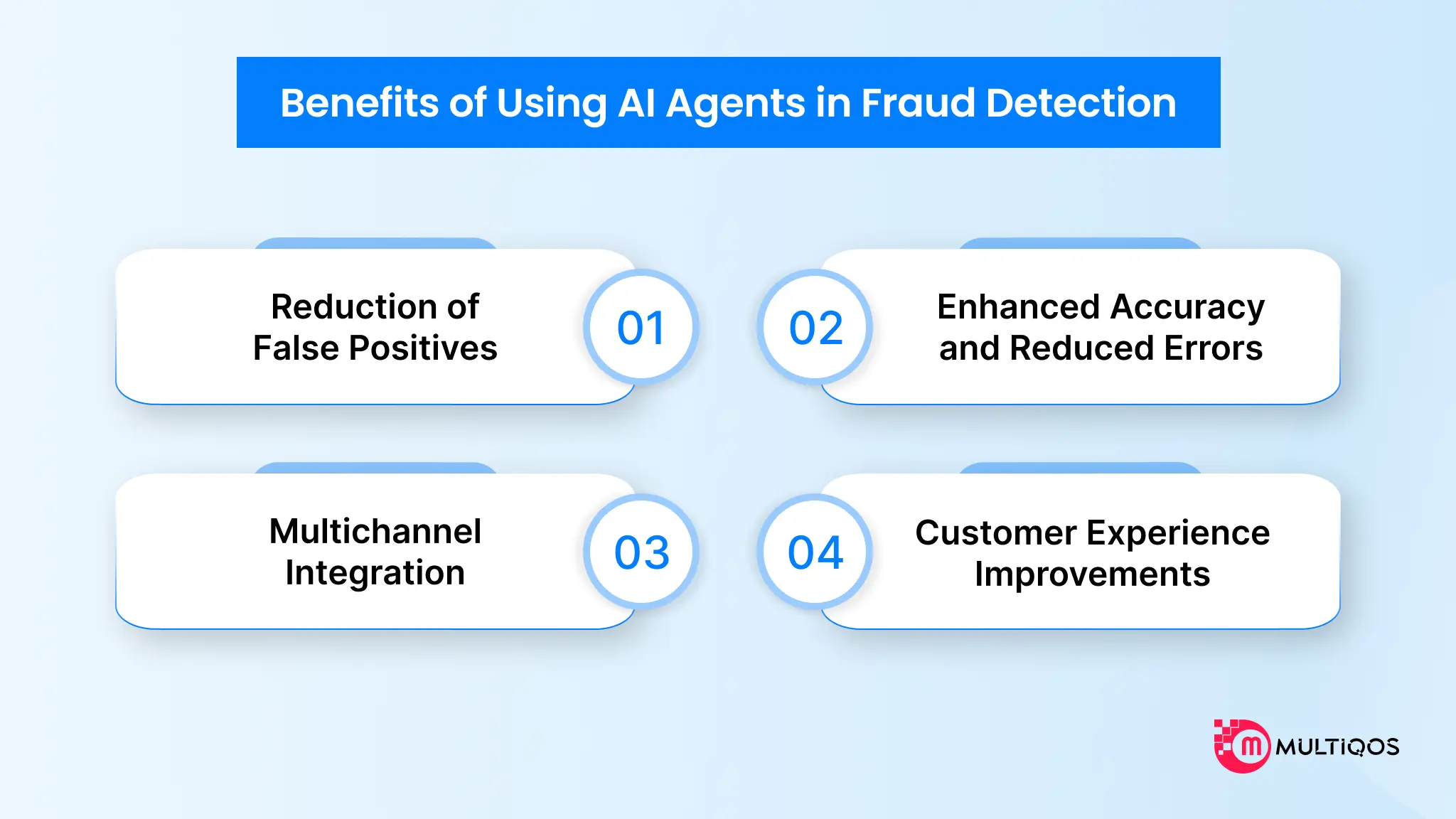
Benefits of Using AI Agents in Fraud Detection
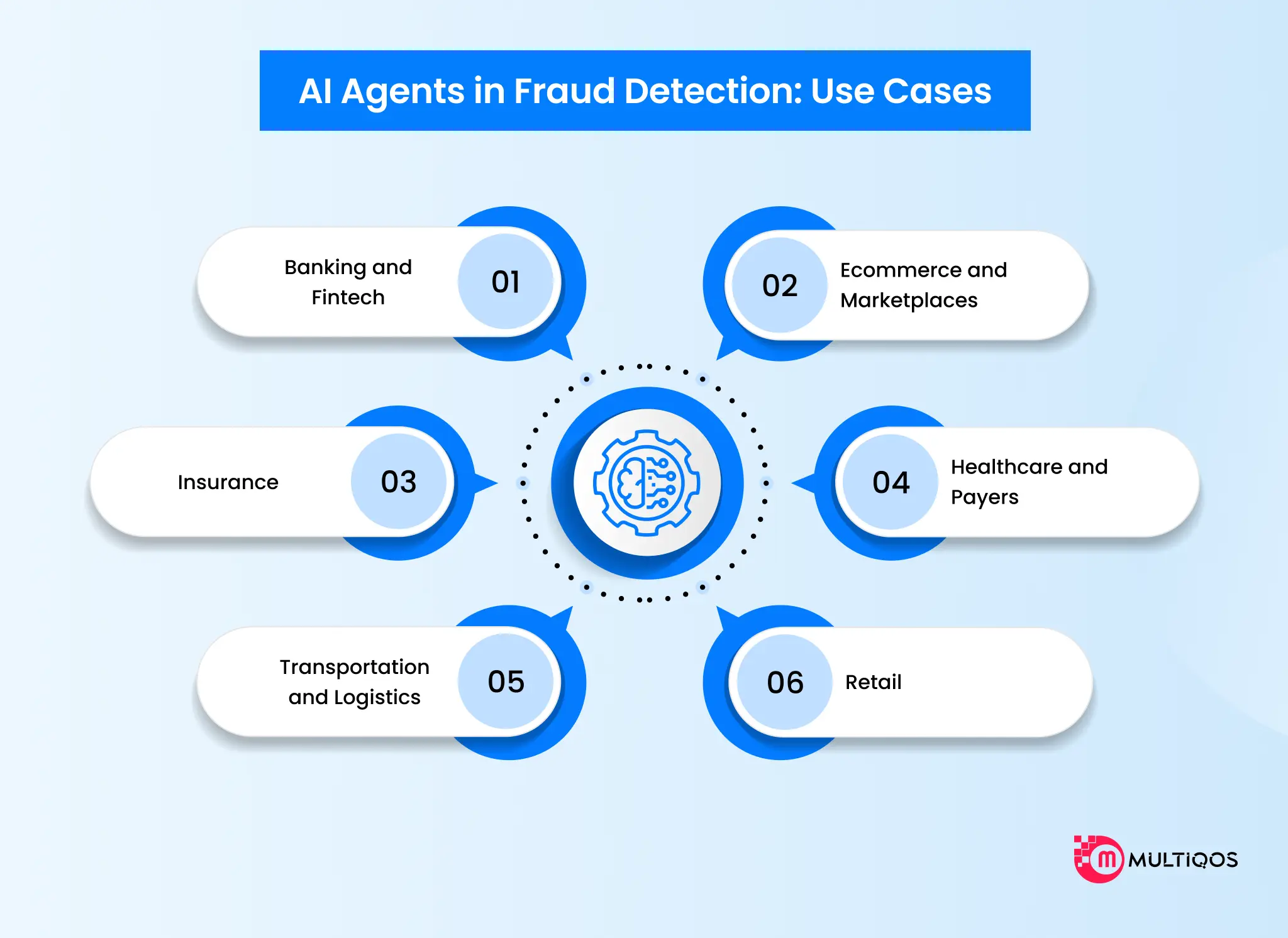
AI Agents in Fraud Detection: Use Cases
Best Practices for Implementing AI Agents for Fraud Detection
Conclusion
FAQs
Summary :
Digital transactions have become the heartbeat of most customer journeys. This scenario has led to an increase in the number of scams. As these attacks are getting sophisticated, traditional systems are struggling to keep up. This is where AI agents for fraud detection step in to fill the gap.
AI agents are continuously analyzing large datasets to find any anomalies. As a result, they are able to reduce human intervention and take the required action with speed and accuracy. This blog covers every aspect of AI agents, starting with their definition, impact, types of fraud they mitigate, use cases and implementation roadmap.
AI Agents for Fraud Detection: The Numbers That Show the Shift
17%
9 out of 10 Americans have encountered at least one digital scam, and 17% have lost money to a scam.
AI-generated scams are not a future trend. They are here. Deepfakes, synthetic identities, and automated phishing have made it easy for fraudsters to succeed in their impersonation attempts. A study finds 51% of Americans have had their identities stolen. Frauds have become faster, cheaper, and harder to find, prompting modern businesses to build a strong and reliable first line of defense.
What are AI agents for Fraud Detection and Investigation?
An AI agent is not a chatbot or a dashboard. It is a simple software that carries out workflow steps on its own. It collects information from transaction histories and checks device signals. After analyzing the available data, an AI agent builds a case narrative and suggests a disposition. The human analyst reviews this information and then makes a decision about the next steps.
There is a simple line of difference between traditional fraud detection methods and an AI agent. With legacy methods, businesses were able to get notifications regarding any suspicious activity. As AI agents investigate every signal thoroughly, the number of false positives is reduced.
Why is Advanced Fraud Detection Becoming the Call of the Hour?
Sophisticated fraud mimics genuine activity and is identified only when the damage is done. As these frauds move fast, traditional systems can’t flag them. AI agents for fraud detection are a better solution, as they operate at the same speed and scale as modern financial activity.
Here’s why modern organizations are increasingly adopting AI agents.
Real-time speed
It takes seconds for changes in payments, logins, and account information. AI agents just take some seconds to evaluate the risk and as a result a scam is stopped before customers can feel the impact.
Behavior-based learning
AI agents learn from history, context, and outcomes. Therefore, AI agents can spot malicious activity that can easily be missed by human agents, especially when no rules are violated.
Compounding environment
With the penetration of technology in every process, frauds are becoming more sophisticated. AI-based fraud detection systems revamp their models regularly to combat the evolving scams.
Faster decisions
High-risk cases leave no room for lengthy review cycles. AI agents can stop suspicious activity, flag any anomaly, and trigger authentication action right away. Human agents remain in charge of every decision, and the system is designed in such a manner that routine business operations continue without interruption.
Hidden communications
With techniques such as graph analysis and deep learning, AI agents spot coordinated activity that is easily missed by human agents. This is beneficial as frauds rarely exist in isolation.
Integration with security signals
Modern fraud prevention looks beyond individual transactions. In financial services, AI-driven detection increasingly factors in how users behave, which device they use, and the context surrounding each interaction. At the more sophisticated end, LLM-based agents make sense of the patterns hidden across these signals and turn scattered data into a clearer picture.
How Do Agents Complement the Fraud Ops Workflow?
AI agents deliver more value when they are implemented by an experienced AI agent development company. Below is a quick overview of how AI agents strengthen the fraud ops workflow at every step.
Step 01: Detection
In real time, embedded rules and models screen every transaction and raise an alert if any suspicious activity is encountered. This detection layer is built on velocity checks, device intelligence, behavioral signals, and risk scores.
Step 02: L1 Triage
An analyst discovers the alert, checks the transaction history, reviews the devices, and then makes the decision whether to stop the transaction or go ahead with it. At this step only, analyst spend 60-80% of their time, and most of the cases turn out to be false positives.
Step 03: Investigation
After the first alert, serious cases are investigated more deeply. AI agents collect more information to determine which accounts, devices, or people are connected. For big organized schemes, they map the connections like a web, so if 40 accounts share the same device or account, the links become visible.
Step 04: Decision and Action
The analyst then decides how to proceed with the case- mark it legitimate, block the account, reverse the transaction, or escalate it further.
AI agents save analysts’ time and effort in steps 2 and 3 as they handle evidence gathering, context assembly, and narrative drafting. The final judgment remains with the human analyst but AI agents reduce the manual work which is required to make the correct decision.
AI Agents in Fraud Detection: Key Components
AI agents have their base in advanced technologies and data-driven processes. They are made up of different critical components.
Input
Input is where everything begins. The agent pulls in real-time data on transactions, user behavior, and past fraud cases, and every analysis it runs builds on that data.
Brain
The brain is the core of the AI agent. It holds the algorithms and rules the agent relies on to spot fraud.
Profiling module: This module sets the agent’s job, whether that’s flagging suspicious activity or watching for changes in behavior. Using historical data and predefined fraud indicators, it builds detailed profiles of what normal activity looks like, so even subtle deviations stand out.
Memory module: This module keeps a large store of data and draws on it regularly to pick up new patterns, helping the agent stay ahead of increasingly sophisticated fraud.
Knowledge module: Think of this as the agent’s reference library. It holds information on fraud schemes, industry best practices, and regulatory requirements, so the agent can make well-informed decisions.
Detection module: This is the agent’s analysis engine. It uses machine learning to review data as it arrives and catch suspicious activity accurately. Businesses can further strengthen fraud monitoring by using data analytics services to analyze transaction patterns, identify unusual behavior, and generate actionable insights from large datasets.Anomaly detection finds unusual behavior, clustering groups related patterns, and predictive modeling helps stop fraud before losses occur.
Action
With natural language processing and machine learning, the agent analyzes large volumes of data, sends alerts when something looks wrong, and recommends what to do next.
AI Agents in Fraud Detection: Core Features
AI agents for fraud detection are a combination of machine learning, behavioral analytics, and real-time data monitoring technologies.
Autonomous decision-making
AI assesses multiple datasets and millions of transactions in milliseconds to raise an alert without involving any human agents. This lowers reaction time and reduces exposure to threats.
Real-time anomaly detection
AI agents scan user behavior, transactions, geolocation, and the use of any network to identify the source of fraud. These agents analyze data and raise alerts when they detect a subtle deviation from the normal signals.
Self-learning capabilities
Machine learning helps AI agents improve their understanding of fraudulent behavior. As flagged cases are either confirmed fraud or false positives, AI agents learn from the results and adapt accordingly.
Multi-channel monitoring
Sophisticated fraudsters never use a single channel to attack; therefore, the line of defense should be extended to every avenue. AI agents monitor multiple channels such as SMS, emails, mobile apps, APIs, and enterprise platforms.
Explainability and traceability
Current industry regulations call for transparency in every AI-generated decision. The agents are based on explainable models that offer a clear, auditable trail for every rationale, enabling businesses to stay in compliance with GDPR, PCI-DSS, and other rules.
AI Agents vs Traditional Agents: Key Differences Explained
Frauds are evolving at an alarming rate. AI agents learn from the available data, raise alerts when identifying an anomaly, and act in real time. Traditional systems work fine when there is fixed logic; however, they struggle when there are regular changes in the fraud pattern.
Capabilities
Traditional Approach
AI Agents
Data processing
Review data in normal batches
Continuously reviewing data to spot anomalies
Pattern recognition
Depends on static rules and thresholds
Spots subtle deviations in the pattern
Adaptability
Software updates required at regular intervals
Learns from the available data
Real-time analysis
Delayed detection from batch processing
Real-time scoring and adaptive authentication
Accuracy
Alert overload or blind spots on new attack types
Gradual reduction in the number of false positives and negatives
Automation
Relies on human intervention at every step
Triage and investigation hints are automated
Scalability
Scales with hardware updates and employee count
Scale with traffic and features
Types of Frauds Detected by the AI Agents
AI agents are designed to combat a wide variety of frauds, from traditional financial fraud to sophisticated cyberattacks. As new threats emerge, they keep analyzing both structured data (such as transaction logs and metadata) and unstructured data (such as emails, voice calls, documents, and social media).
Payment and Transaction Fraud
Fraud rarely starts with a single large event. There are minor signs such as changes in spending frequency, unusual locations, or a dramatic increase in the number of transactions. AI agents are continuously monitoring these patterns; as a result, they are able to detect any subtle deviation and send alerts for unusual activities.
Fake Account Creation
AI agents can determine the creation of fake accounts by evaluating the details that were given at the time of signing up. These agents look for red flags such as mismatched details or patterns that indicate stolen identities. They also support account takeover prevention by comparing applicant information against the available historical data.
Card Fraud
AI screens every transaction. It monitors spending velocity and checks merchant categories against the cardholder’s past behavior, fingerprints devices, and flags impossible travel. When the risk rises, it triggers step-up checks like OTP or 3DS, stopping fraud without hurting conversion.
Document Forgery
AI agents examine every document with OCR. They compare fields to templates to reveal copy-edit moves, copied stamps, and uneven lighting. All files with issues are sent to human agents for further review and next steps.
Insurance Claims Fraud
By cross-checking claim documents, timings, and repair shops involved, AI agents identify duplicate submissions and staged accidents. The agents inspect photos for any recycled or doctored damage. Also, they give human agents a checklist to speed up the claims process and reduce overpayment scenarios.
Synthetic Fraud
Synthetic identities are built from realistic-looking details, so they usually sail through the first round of verification. The problem only shows up later. AI-driven fraud detection keeps watching an account from the day it’s opened, comparing what was submitted at signup with how the account actually behaves over time. That helps it catch mismatches a one-time check would miss, which is especially valuable for enterprise risk teams handling large onboarding volumes.
E-commerce Return Abuse
By tracking how often items are kept versus sent back, broken down by customer, product, and season, AI spots patterns like wardrobing and repeated refund abuse. It also compares return photos with the listed product details and updates return policies on the fly, so honest shoppers still get an easy returns experience.
Telecom Fraud
By tying SIM swaps to the moments when accounts are most vulnerable, AI can catch call-forwarding loops and roaming activity that doesn’t fit a customer’s normal pattern. It also exposes people who exploit promotions and subscriptions, so carriers lose less money to unpaid bills while real travelers can still use their phones abroad.
Money Laundering
Moving funds illegally is rarely a single event. It is spread across many accounts in different timelines. AI agents connect these fragmented signals to expose organized activity such as mule networks and layering schemes that human reviewers tend to overlook.
Benefits of Using AI Agents in Fraud Detection
Reduction of False Positives
AI agents monitor customer history, device, and behavior instead of reacting to a single rule or threshold. As they learn from every case that analysts confirm or clear, they are able to identify suspicious activity more accurately. The result is fewer false positives and analysts focusing on the real threats.
Enhanced Accuracy and Reduced Errors
Accuracy is critical. Even a mistyped number or missed flag can lead to serious consequences. As AI agents analyze large amounts of data, fewer errors are missed, and reliable outcomes are derived.
Multichannel Integration
Attackers move freely between channels, and fragmented visibility is what lets them get away with it. When the agent draws on web, mobile, call center, and in-store signals together, it sees the whole pattern instead of isolated pieces. Common identity graphs and device intelligence keep teams from working in silos, cutting down on redundant customer verification while closing the openings fraudsters look for. Success shows up in three metrics: cross-channel match rate, duplicate investigation rate, and fewer multi-touch fraud cases.
Customer Experience Improvements
Customers are less likely to return if they are kept waiting for any approval. Risk-based challenges replace the blocks that prevent trusted users from getting quick approval. If the system finds something unusual, it quickly sends an alert for verification and then moves on. It monitors approval rate, checkout speed, and repeat usage to improve user satisfaction, loyalty, and revenue.
AI Agents in Fraud Detection: Use Cases
AI agents are changing the fraud detection game across multiple industries. They continuously evolve to adapt to sophisticated threats and deliver accurate real-time solutions.
Banking and Fintech
AI agents monitor transactions, user logins, and device fingerprints in real time, stopping mule activities, account takeovers, and synthetic identities before funds leave the account. They also lighten the load on KYC and AML work by checking documents, running watchlist screenings, and passing along only the cases a human truly needs to review. For banks, the payoff is more good transactions approved, fewer false positives, and interchange revenue that stays protected.
Ecommerce and Marketplaces
Retailers are using agents to detect returning rings, coupon abuse, return fraud, and stolen cards. As agents are trained on customer behavior, they block only risky transactions, letting genuine users continue with their shopping. The AI agents assemble dispute evidence to recover more revenue.
Insurance
Rather than checking every document separately, insurance companies have AI agents check all the claim-related documents at once. Staged accidents and padded incidents are identified by the AI agents and sent to SIU for further investigation. Straightforward claims are processed quite early.
Healthcare and Payers
AI agents enable payers to identify services that were never availed, costlier treatments than were actually provided, repeat submissions, and stolen patient identities. They measure each claim against the clinical guidelines and how similarly providers behave; they point reviewers to anything unusual as it happens. Providers get clear feedback, patients face fewer interruptions, no money is lost, and care is not delayed.
Transportation and Logistics
AI agents track telematics, customs declarations, and routing data. They also monitor route deviations, cargo tampering risks, and misclassified shipments. The agents compare the documents and highlight audit anomalies. Margin control is automatically improved, and disputes between brokers and shippers are reduced.
Retail
Retailers pair AI agent monitoring with the POS, CCTV metadata, and staff activity logs. The agents detect refund abuse, suspicious voids, and serial returners. It also reviews new credit applications and loyalty signups for identity theft.
Best Practices for Implementing AI Agents for Fraud Detection
Implementing agentic AI for fraud detection delivers the best results when technology, data, and human expertise are combined strategically.
Prepare and Integrate Data
Organizations clean and standardize transaction, account, device, and behavioral data and resolve identities across channels. They also build real-time and batch pipelines, along with feature stores, making it easy for the agents to detect velocity and device reputation.
Design the Agentic AI Architecture
Each agent is assigned a set role, like data extraction or action execution. An orchestration layer sits between them. Human agents are in the loop for making decisions on ambiguous cases.
Implement Explainability and Monitoring
Every alert comes with a human-readable reason and short narrative. Dashboards track model health, precision, recall, false positive rate, and customer friction, with alerts for drift and unusual patterns.
Establish Governance, Security and Compliance
The governance program should be comprehensive, consisting of data privacy, model risk and resilience, with access controls and full audit trails.
Optimize with Feedback
Training data should be refreshed periodically with the details of closed investigations. Any suggestions from the analyst should also be directly incorporated in the case tool.
Conclusion
AI agents can be termed as the new-age tools that enable businesses to respond to and prevent fraud. They learn continuously from the available data, evolve as the data volume increases, and free human agents from routine tasks. With an AI agent development company, organizations are able to reduce financial losses, build customer loyalty, and improve efficiency.
As fraud becomes more sophisticated, AI agents will keep finding their application. Ready to strengthen your fraud prevention perimeter? Connect with MultiQos today to see how custom-built, LLM-powered AI agents protect your organization.
FAQs
The most common fraud is related to payments. It primarily involves stolen credit cards and unauthorized fund transfers.
No. AI agents complete the manual tasks, leaving the decision-making part for the human analysts.
AI agents require transactional logs, behavior data, device metadata, geolocation, and
historical fraud patterns to deliver clear results.
Yes, modern AI agents are compliant with current industry laws and regulations such as GDPR, PCI-DSS, and HIPAA. AI agents have built-in mechanisms such as data masking and access control.
Banking, e-commerce, insurance, telecom, and healthcare industries are positioned to benefit the most from AI agents.
Prashant Pujara is the CEO of MultiQoS, a leading software development company, helping global businesses grow with unique and engaging services for their business. With over 15+ years of experience, he is revered for his instrumental vision and sole stewardship in nurturing high-performing business strategies and pioneering future-focused technology trajectories.


 ChatGPT
 Perplexity
 Claude
 Google AI Mode