How Machine Learning is Implemented in Healthcare (Data, Models & Workflow)
Machine Learning vs. Traditional Statistics vs. AI in Medicine
9 Key Uses of Machine Learning in Healthcare
What are the Benefits of Machine Learning in Healthcare?
Real-World Machine Learning Applications by Healthcare Segment
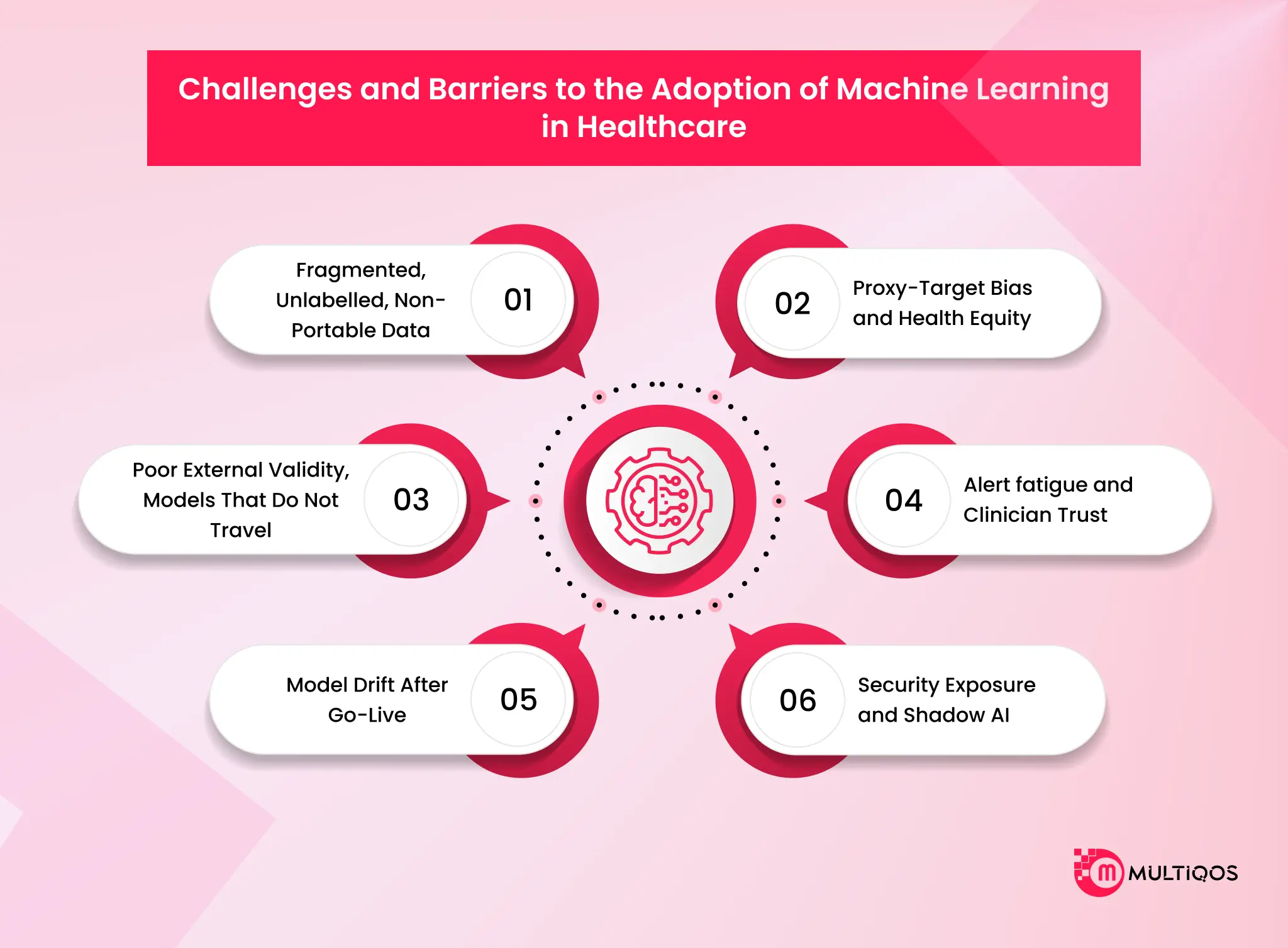
What are the Challenges and Barriers to Adoption of Machine Learning in Healthcare?
What are the Regulatory & Compliance Considerations for ML in Healthcare?
How Healthcare Organizations Can Implement Machine Learning
Build, Buy, or Partner? A Decision Framework
Conclusion
FAQs
Summary:
Machine learning in healthcare trains models on clinical, imaging, genomic, and claims data to learn patterns from examples instead of coded rules. This guide covers how those models are built and deployed, eight clinical and operational applications, the benefits, six adoption barriers, HIPAA and FDA requirements, and a five-phase implementation path.
Market Overview: ML in Healthcare
39.80%
Machine learning led the market with a 39.80% share in 2025 and is set to remain the top segment going forward.
Machine learning in healthcare is the use of algorithms that learn from clinical, operational, and genomic data to predict outcomes, flag risk, and personalize treatment, without a human writing a new rule for every case. That capability is no longer experimental. Major US healthcare organizations are now spending$13,000 per clinician on AI and automation, and the bulk of it is going toward machine learning specifically.
So what does that spend actually buy inside a hospital? In diagnostic imaging, it means faster reads and earlier flags on critical scans. In the ICU, it means predicting sepsis or cardiac deterioration before the vitals monitor does.
In oncology, it means matching a treatment plan to a patient’s own tumor DNA instead of a population average. And in the back office, it means automating the documentation and coding that eats into a clinician’s day. The mechanism is the same across every one of these: a model trained on enough clean, representative data outperforms a static, rule-based system at spotting the pattern a human would miss.
This guide covers what that looks like in practice: the core benefits, the use cases already running in production, and the challenges that decide whether an implementation reaches that point or stalls as a pilot. But first, let’s understand what machine learning is in healthcare and how it actually works.
What is Machine Learning in Healthcare?
Machine learning in healthcare is an approach of training data models on clinical, imaging, insurance claims, and IoT device information to learn patterns from examples rather than rules set by a developer.
The impact of implementing machine learning in healthcare has been phenomenal, helping organizations and clinicians reduce diagnosis time and errors and improve patient care.
McKinsey’s Q4 2025 healthcare survey of 150 payers, care organizations, and health services and technology firms found that 50% of US healthcare organizations have implemented generative AI, up from 25% two years earlier.
Another report from Deloitte for the 2026 US health care outlook shows that C-suite executives are planning to invest more than $500 million in revenue, and finds that 49% are still experimenting and only about one-third are operating AI at scale.
So there is enough interest in the implementation of machine learning in healthcare, but the problem lies in the execution. Experimentation needs one dataset and one clinical champion, while scale needs data engineering, governance, and a monitoring commitment that outlives the project sponsor.
Now that you know what machine learning is in healthcare, let’s understand how it works.
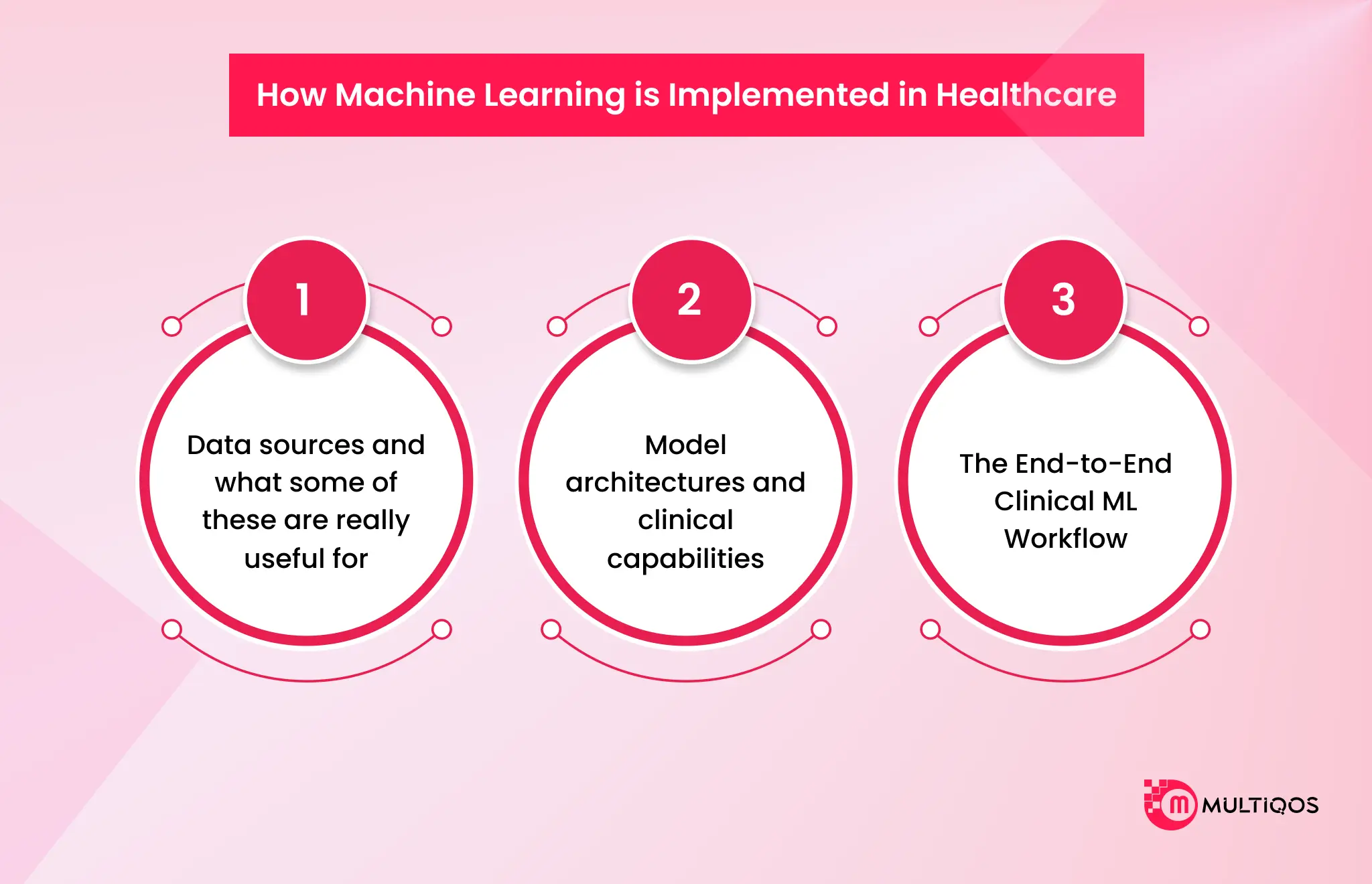
How Machine Learning is Implemented in Healthcare (Data, Models & Workflow)
In healthcare, there is a need to understand the end-to-end machine learning pipeline. Moving past the theoretical approach, enterprises need to examine the ways in which data is sourced, used to train models, and how predictive systems work.
Step 1: Data sources and what some of these are really useful for
Machine learning models need a lot of data, and it must be of high quality. There are various data modalities, and they are useful for different clinical and operational purposes,
Electronic Health Records (EHR): Structured information, such as lab results, vitals, and physician notes, is used to predict readmission risks. Plus, it aids in disease monitoring and clinical documentation automation via Natural Language Processing (NLP).
Medical Imaging (DICOM): X-rays, CT, and MR scans are important sources of information for computer vision models. This enables algorithms to identify fractures, cardiovascular problems, and tumors.
Genomics and Molecular Data: Machine learning processes analyses of genetic sequences and molecular profiles of patients so that it can help with precision medicine and diagnosis. Algorithms will analyze the vast amount of genomic information to identify disease biomarkers.
This allows doctors to more accurately predict what any particular patient will respond to when they are prescribed certain targeted treatments. Moreover, it can also speed up drug discovery procedures by reproducing molecular interactions.
Step 2: Model architectures and clinical capabilities
Depending on the nature of the data, various kinds of machine learning architectures are required to transform the raw data into clinical insights.
Computer Vision: CNNs can handle 2D and 3D medical imaging such as X-rays, MRI scans, and digital pathology slides. This will enablecomputer vision to identify anomalies such as tumors, fractures, or diabetic retinopathy.
NLP and LLMs: Both systems are used to analyze unstructured data, such as text, physician progress notes, biomedical literature, and patient histories. Medical coding is automated with NLP and LLMs to permit clinicians to provide follow-up suggestions and differentiate high-risk patients with free-text prompts.
Predictive Analytics and Tabular Models: With the help of ML algorithms, healthcare systems can analyze structured EHR data and forecast acute risk, including the onset of sepsis, transfers to the ICU, and hospital admission.
Multimodal Foundation Models: These are AI architectures that integrate text, medical imaging, and real-time physiological signals into more integrated systems, and these systems offer a more comprehensive clinical synthesis and multifaceted decision support for clinical care.
Step 3: The End-to-End Clinical ML Workflow
In order to deploy machine learning models, from research to patient diagnosis and treatment, a continuous lifecycle is needed.
Data Collection and Preprocessing: Raw Data is collected, and features are extracted by normalizing the data. This phase also includes a strict de-identification process, which helps healthcare institutions and organizations comply with privacy regulations like HIPAA and GDPR.
Model Training and Validation: Most of the algorithms are trained on meticulously curated and labeled datasets. These kinds of datasets contain data such as biopsy results and marked-up skin lesion images, and assist doctors in correlating inputs with known diagnoses. One indicator of algorithmic bias is the extent to which the healthcare organization has performed a thorough audit of the ML models when validating them.
Workflow Integration: Models are integrated into clinical workflows via interoperability standards such as SMART on FHIR or back-end APIs, once the validation process is complete.
Dataset Shift: ML models are very sensitive to shifts in the datasets. This means that the algorithm’s accuracy will diminish over time as a result of changes in the hospital equipment, clinical guidelines, or demographics of patients.
Distinguishing machine learning from traditional statistics and AI in medicine. Patient care operational workflows that use ML algorithms would be at different levels of computational technology.
To really make the most of AI demands a distinction between traditional analytics, machine learning, and general AI. These technologies are not rival technologies, but a tiered set of capabilities.
Machine Learning vs. Traditional Statistics vs. AI in Medicine
The operational workflows that would use ML algorithms for patient care rely on distinct tiers of computational technology. This requires a clear distinction between traditional statistical analytics, machine learning, and broad artificial intelligence. These technologies represent a hierarchical framework of capabilities rather than competing systems.
The technical differences between these methodologies are,
Feature
Traditional Analytics & Statistics
Machine Learning (Traditional)
Deep Learning
Core Mechanism
Depends entirely on predefined rules and manual equations.
Algorithms learn and improve automatically through data exposure, requiring humans to manually select relevant features.
Multi-layered neural networks automatically extract complex features and hidden patterns from raw data.
Ideal Clinical Data
Small, structured datasets.
Structured tabular data, such as electronic health records (EHRs) and laboratory results.
Unstructured data, such as medical radiology images, clinical notes, and genomic sequences.
Interpretability
Highly transparent logic.
Generally interpretable, allowing clinicians to trace which specific factors drove a clinical prediction.
Often operates as a “black box,” making it difficult for physicians to explain the rationale behind a diagnostic conclusion.
Infrastructure Needs
Runs efficiently on standard computers with smaller data volumes.
Works effectively with smaller datasets and standard computing hardware.
Requires massive datasets and high-performance GPUs for training.
Differentiating traditional statistics from machine learning and deep learning does provide technical clarity, but for an organization seeking the true value of using a machine learning algorithm, it’s best realized when computational power makes it an operational reality.
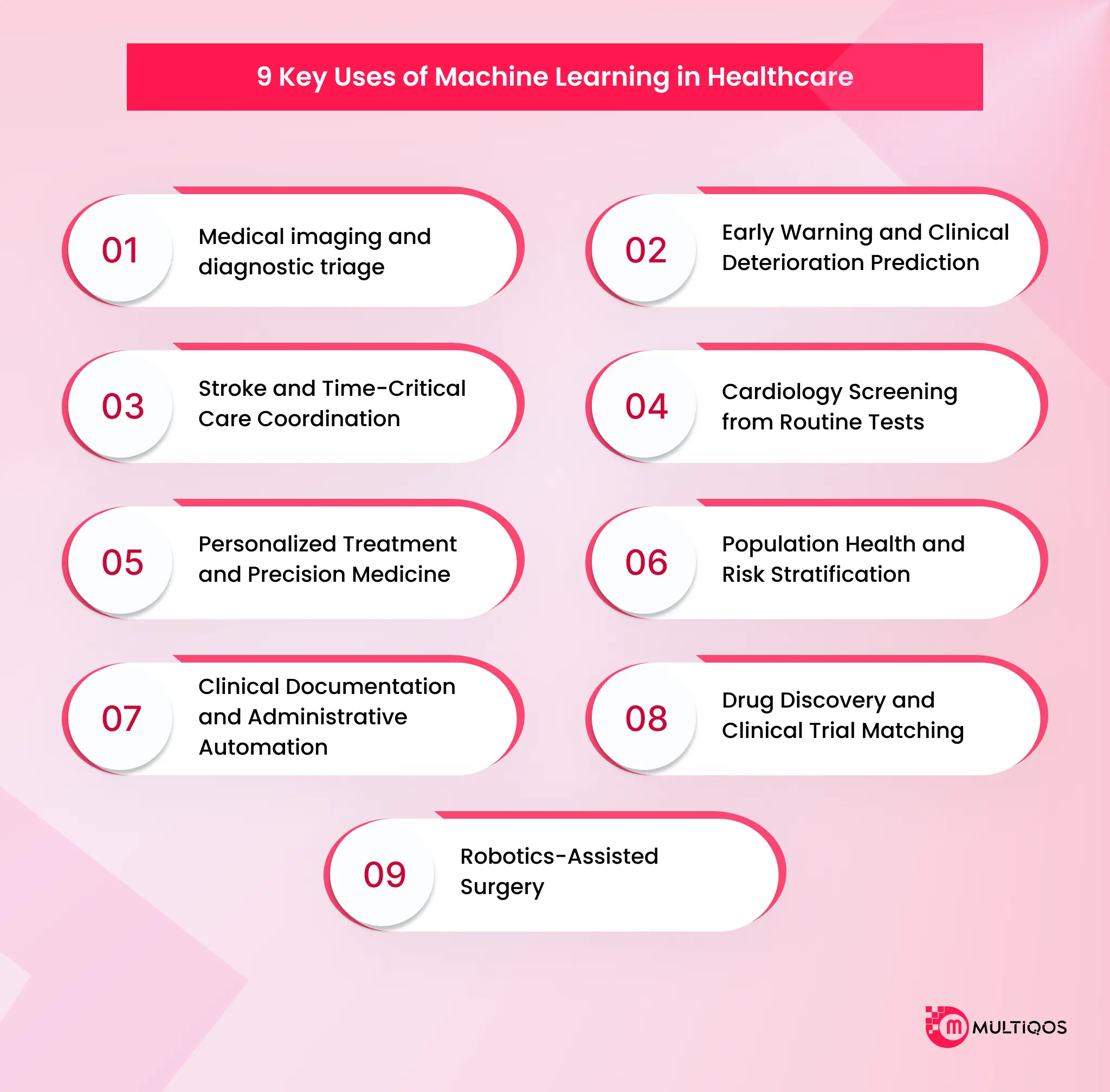
9 Key Uses of Machine Learning in Healthcare
From identifying cardiac rhythm disorders to detecting heart failure or rapidly and accurately assessing radiological images such as X-rays, machine learning algorithms have been phenomenal in helping clinicians diagnose several diseases and critical conditions. Some of the important applications of machine learning in healthcare are as follows:
Medical imaging and diagnostic triage
Using machine learning algorithms in healthcare operations, medical imaging and diagnostic triage applications become more efficient. In particular, it minimizes patients’ wait time from hours to minutes. Rather than using a first-come, first-served approach to process critical scans, AI can flag important conditions straight away for radiologists.
Early Warning and Clinical Deterioration Prediction
Use machine learning models to monitor patients’ vital signs in real time with EHS and foresee sudden deterioration without signs. For example, it can help you with sepsis prediction, detect ICU readmission risk, and help you with code blue forecasting.
Stroke and Time-Critical Care Coordination
Machine learning algorithms connect emergency medical services, radiologists, and neurologists instantly to synchronize operations, helping them reduce the risk of acute strokes. It helps flag large vessel occlusions on CT angiograms. Plus, it can calculate mismatch tissue volumes to show clinicians how much brain tissue is damaged and how much can be saved. These systems help the care team, cutting down on sequential delays, and allow off-duty specialists to review diagnostic-grade scans even on smartphones.
Cardiology Screening from Routine Tests
This can detect structural heart diseases well before they will have any symptoms. In particular, algorithms have the capability of identifying subtle evidence of left ventricular dysfunction from normal 12-lead electrocardiograms.
Can also screen and identify geometric heart muscle thickening patterns and analyze normal sinus rhythms. A type of software that automatically quantifies coronary artery calcification during a routine chest computed tomography (CT) scan.
Personalized Treatment and Precision Medicine
Machine learning in healthcare helps clinicians easily aggregate huge amounts of genomic data, lifestyle parameters, and clinical trial data. This helps them extract key information and find the exact therapeutic match for individual patient biologies.
ML models can cross-reference tumor DNA mutations, plus predictive algorithms leveraging machine learning calculate individual metabolic rates to tailor narrow therapeutic index drugs.
Population Health and Risk Stratification
Hospitals treat patients one at a time, but risk shows up at multiple levels: first, across demographic clusters in unstructured notes that are not yet coded, and often across regions. Leveraging machine learning in healthcare analytic engines can predict which pre-diabetic or hypertensive patients are most likely to advance to severe stages.
Plus, NLP would extract unstructured social notes for signs of housing or food insecurity. Models flag high-risk emergency department repeat visitors and pair them with social workers before the next visit happens.
Clinical Documentation and Administrative Automation
Most of the doctors and clinicians spend a massive amount of time on patient documentation, tracking, and diagnosis. With machine learning algorithms, NLP, andgenerative AI capabilities, the entire documentation part of patient care can be automated.
For instance, automated scribes can automatically record the entire conversation between the patient and physician, along with ambient audio, and automatically create a standard SOAP note. Hospitals can create automated medical coding software that will be able to translate the paperwork into accurate ICD-10 and CPT coding for quicker payment and insurance claims. The samedocument automation pattern insurers run on claim intake.
Drug Discovery and Clinical Trial Matching
Using machine learning in healthcare, virtual high-throughput screening can be efficient. Plus, it lets generative AI design and test millions of synthetic molecules digitally, and this happens in days and not years. Processes like protein folding prediction can be done using machine learning models.
It helps in mapping complex 3D protein structures to uncover novel target biological pathways. When it comes to clinical trial matching engines developed specifically for such functions using machine learning algorithms, they help read trial criteria across registries to match complex patient files with open research slots.
Robotics-Assisted Surgery
Machine learning models embedded in surgical robots translate a surgeon’s hand movements into micro-precise, tremor-filtered actions, while computer vision overlays real-time tissue recognition onto the operative field to flag nerves, blood vessels, and tumor margins before the instrument gets near them.
In particular, systems like the Smart Tissue Autonomous Robot (STAR) at Johns Hopkins have used 3D imaging and machine learning-guided suturing to complete soft-tissue procedures, such as intestinal anastomosis, without a surgeon’s hand on the controls.
Plus, predictive algorithms calculate the ideal approach angle and instrument path before the first incision, cutting operative time and blood loss compared to manual laparoscopic techniques. These models also flag deviations from the planned surgical path mid-procedure, giving the care team a second set of eyes on every cut.
Now that you know what the key applications of machine learning algorithms are, for an organization like yours, it’s important to understand what benefits you can get from implementing machine learning in healthcare operations.
What are the Benefits of Machine Learning in Healthcare?
Real gains of using machine learning for healthcare operations land in three places:
Clinical
Operational
Financial
Let’s understand how machine learning algorithms offer benefits to hospitals, clinicians, and doctors across these three aspects of the entire healthcare operation.
What are the Clinical Benefits of ML in Healthcare?
ML algorithms flag microstructural changes in imaging or subtle deviations in blood work before a symptom shows up. This helps doctors to offer better diagnoses. Plus, deep learning technologies act as an automated second reader, catching the skewed nodule or the hairline fracture that human fatigue lets slip away.
Apart from the efficient diagnosis benefit, automated triage reduces image interpretation time from hours to minutes, so doctors can make decisions faster, reduce patient wait times, and, most importantly, avoid delays in important treatments.
What are the Operational Benefits of Machine Learning in Healthcare?
Oftentimes, a hospital does not need a faster MRI scan. Rather than that, it needs an MRI scan that offers the right data for clinicians. Plus, it needs to ensure that the recommendation of an MRI scan can accurately help the patient with better treatment.
Apart from all the efficiency aspects, a hospital needshealthcare software systems that can manage patient admissions properly, and this is why predictive scheduling and automated imaging triage become important. Using machine learning in healthcare, these aspects of a hospital become far more accurate, ensuring diagnostic machines and operating rooms can handle more patients a day without investing a large amount of money in new equipment.
Hospitals can design early intervention protocols and automated discharge summaries using machine learning modules, which move patients out of beds faster with the most accurate treatment plans. Patients also get healthier much faster, and the burden on the hospital also reduces at the same time.
What are the Benefits of Machine Learning in Healthcare Financially?
As a hospital, one of the most important questions that come to mind is, “Why should your organization invest in machine learning algorithms?” This is where the most important benefit becomes clear. Machine learning algorithms would help you accelerate workflows and maximize the use of high-revenue assets, scaling clinical volume without expanding expenditure.
For example, you can design automated coding tools that can read unstructured data and provide important missed diagnostic information, and close your billing cycle faster. Plus, it helps community hospitals safely manage complex cases in-house using local AI tools. The entire transfer scenario and the revenue that goes with it, using this local AI toolkit, help you reduce the revenue leak.
What do the Benefit Numbers not tell you?
Right from the discussion about efficiency to the discussion about operational workflow, collaborations, accuracy of diagnostics, and financial benefits, an important thing to note here for every organization that offers healthcare services is that the true potential of machine learning is not just in the numbers, but it is in the type of results it offers. Machine learning algorithms accelerate workflows and maximize the potential of your existing processes.
What this means is that your entire workflow, right from patient onboarding to patient data capture, to diagnostic recommendations, to analysis of patient data, to creation of treatment plans, to patient admissions, to patient discharge, to insurance claims and efficient billing, is managed almost entirely through automation using ML algorithms. This is not end-to-end automation, and your doctors and clinicians do have their input, but still, you will get faster diagnostic solutions for your patients. The delays will be reduced. Much more personalized care and treatment plans can be developed, ensuring that you provide the best healthcare services out there.
Despite several benefits and applications, you can implement machine learning in healthcare. It is important to note that there are several challenges to your adoption plan, which, as an organization, you need to overcome. This is where amachine learning development partner helps. However, you need to understand the challenges of adoption before choosing an ML implementation partner.
Real-World Machine Learning Applications by Healthcare Segment
The only way to really get a grasp of what machine learning in health care delivers is to examine organizations that got past the initial pilot phase. Let’s take a look at five examples from each of these areas: imaging, pathology, drug discovery, analytics, and administration.
1. Zebra Medical Vision – Imaging Triage at Population Scale
Radiology departments have the problem of volume. Scan numbers continue to grow; there aren’t enough radiologists, and time-sensitive results, such as a brain bleed or a collapsed lung, can be stuck in a waiting line behind a routine scan.
Zebra Medical Vision developed a series of algorithms capable of parsing all the CT and X-ray studies that are received and automatically prioritizing studies with potential critical findings for immediate attention, making the worklist shift based on urgency rather than when the studies arrive.
The company not only took a clearance-first approach but went so far as to achieve seven FDA clearances by December 2020, including the first FDA-approved AI chest X-ray triage product for pneumothorax.
2. PathAI – Removing Variability From Tissue Review
Pathology scoring is subjective, and as such it costs money. The grading of a liver biopsy by two qualified pathologists may be different, thereby decreasing the validity of the clinical trial endpoints and drug approval process. To frame the machine learning algorithms as an assist to pathologists, regulators respond, as they are trained using annotated whole slide images and are used to score MASH histology consistently.
In December 2025, AIM-MASH AI Assist was the first AI-assisted pathology tool to be FDA qualified as an MASH drug development tool, allowing sponsors to utilize the AI with MASH trials without having to re-justify the methodology every time. The lesson is, is that variance reduction tends to be a larger unlock than raw accuracy.
Pathology scoring is subjective, and that subjectivity is expensive. Two qualified pathologists reading the same liver biopsy can grade it differently, which weakens clinical trial endpoints and slows down drug approvals.
PathAI trained machine learning algorithms on annotated whole-slide images to score MASH histology consistently, then positioned the tool as an assist to the pathologist rather than a replacement, which is the framing regulators respond to.
3. Insilico Medicine – Compressing the Drug Discovery Timeline
Drug discovery takes time to discover a drug, and the majority of the loss occurs early in the process, with years invested in targets that do not pan out. In just about 18 months, Insilico Medicine progressed from the discovery of a new target for idiopathic pulmonary fibrosis to a molecule they designed to target the novel receptor, as opposed to the multi-year period that typically takes place.
The drug, called rentosertib, was tested in a Phase 2a trial of 71 patients across 21 sites, and the results were published in this week’s issue of Nature Medicine. Patients receiving the highest dose had a mean improvement of 98.4 mL in forced vital capacity over 12 weeks, as opposed to a decline of 62.3 mL in the placebo arm.
It’s the best clinical evidence that machine learning can actually create new biology, rather than just a faster version of the same.
4. Health Catalyst – Analytics Infrastructure Before Algorithms
So, most health systems attempt to purchase a model before they work on their data, which is why so many pilots never get off the ground. UnityPoint Health has chosen the opposite approach, spending eight years developing a single data platform with Health Catalyst thatintegrated with legacy systems including the EHR, lab systems, and accounting.
Over two years, they are estimated to have saved and generated over $100 million in savings and revenue, including $41 million in reduced length of stay; $32 million in revenue generated from AI for care management.
A 39% decrease in ED visits in a single year of the program; and a benefit cost ratio of 15:1 that was maintained for seven years. So, if you are looking for a starting point to get your hands dirty with ML to work on healthcare, you got it right – first platform, second models.
What are the Challenges and Barriers to Adoption of Machine Learning in Healthcare?
Enterprises planning to implement healthcare AI often miss the key challenges to adoption, which break the pilot before it reaches production. This is the gap that you need to understand as an enterprise before implementing such projects.
Fragmented, Unlabelled, Non-Portable Data
One of the key challenges of implementing healthcare machine learning systems is the issue of data readiness. Most of the hospitals and healthcare organizations do not have data that is easily readable or compatible with the latest machine learning algorithms.
Any model is as good as the data it is trained upon, so it is important to have your data ready. Most of the data sits fragmented across EHR vendors, lab systems, and imaging archives, so you need a centralized system that can provide the right data to train ML models according to specific operations at healthcare organizations.
Proxy-Target Bias and Health Equity
If your ML model is trained on biased data, it will offer recommendations that are also biased. What this means is that it will not offer accurate data recommendations for diagnostic purposes, and the treatment plans will also be affected.
For example, if pulse oximeters were calibrated on lighter skin tones, then you will have readings that are off for everyone else, and this will cause issues when you have patients with other skin tones. This is why it is important to have your models unbiased, and this is where you need a technical partner who can offer betterdata engineering solutions.
Poor External Validity, Models That Do Not Travel
The idea of a patient-agnostic ML model is great, but it requires revalidation at a specific hospital. What this means is that a model that performs at one hospital may not perform similarly at another hospital due to patient mix, staffing ratios, different differentiation, and older documentation habits.
Alert fatigue and Clinician Trust
Most of the time, clinicians and doctors have to handle multiple functions. It’s not just about conversations with the patients. They also have to manage prescriptions, scan different patient records, understand their symptoms, create diagnostic analysis, and manage treatment plans. All of this creates fatigue.
Plus, the fragmentation of attention leads to the exit failure mode the alert was built to prevent. The best approach here is to turn alerts into clinicians’ actual decision points, not create a noisy environment clogged with multiple alerts at the same time.
Model Drift After Go-Live
One of the most challenging aspects of implementing machine learning algorithms in healthcare is to ensure that models do not drift after deployment. A study from PLOS Digital Health tracked and observed that Most of the deployed clinical AI systems are adrift over the span of 18 to 24 months.
And this is where calibration and continuous model monitoring make more sense. A technical partner can help you calibrate the ML models, ensuring that even after validation, they do not go awry.
Security Exposure and Shadow AI
Most of the enterprises that want to implement machine learning models need to understand the security risks. For example, medical workers and administrators often use AI tools that are not sanctioned by the organizations.
They provide key patient data as input to these chatbots, and this risk causes exposure of patient data in the public domain because these unvetted chatbots do not comply with key regulations like HIPAA and GDPR.
However, there are many different compliance and regulatory considerations that you need to keep in mind before implementing ML models.
What are the Regulatory & Compliance Considerations for ML in Healthcare?
From governing the patient data to how these ML models behave, there are many different regulations that you need to consider before creating your implementation roadmap.
HIPAA – PHI, BAAs, De-identification, and the Minimum Necessary Rule
Any dataset carrying PHI needs a signed BAA with every vendor touching it, including your cloud and ML partners. Safe Harbor de-identification strips 18 identifiers; Expert Determination lets you keep more signal if a statistician certifies re-identification risk is low.
The minimum necessary rule still applies to training data, so pulling a full EHR export when the model only needs labs and vitals is a finding waiting to happen.
FDA – When Your Model Becomes a Device
If your model informs a clinical decision and the clinician cannot independently review the basis for it, it is likely Software as a Medical Device. Low-risk tools go through 510(k) with a predicate. Novel ones go De Novo. Administrative tools such as coding, scheduling, and claims usually stay outside the FDA’s scope.
Predetermined Change Control Plans
A PCCP lets you specify, at submission, what model changes you plan to make and how you will validate them. Retraining on newer data, threshold recalibration, and site-specific tuning can ship without a new submission if they fall inside the plan. Write it wide enough to cover real drift work.
ONC HTI-1 – Transparency Rules
Even when the FDA is not involved, HTI-1 requires certified health IT to disclose 31 source attributes for predictive decision support: training data, intended use, known limitations, fairness testing. If your model lives inside a certified EHR, this applies to you.
A 6-Question Decision Tree
Does it touch a clinical decision?
Can the clinician see the reasoning?
Does it diagnose, drive treatment, or triage?
Does it run inside certified health IT?
Does it use PHI?
Does it update itself after go-live?
Yes to the first three means clearance. Yes to the fourth means HTI-1 disclosure regardless.
How Healthcare Organizations Can Implement Machine Learning
Phase 1 (Weeks 1-4): Use-case selection and data readiness. Pick one workflow with a clear owner and a measurable outcome. Audit whether the data exists, is labeled, and is retrievable.
Phase 2 (Weeks 5-12): Model development and internal validation. Build on your own population. Report subgroup performance, not just AUC.
Phase 3 (Weeks 13-20): Silent-mode shadow deployment. The model runs on live data; nobody sees the output. This is where you catch the gap between retrospective and real performance.
Phase 4 (Weeks 21-28): Clinical pilot at one site. One unit, defined fallback, named clinical champion.
Phase 5: Governed rollout and monitoring. Drift dashboards, quarterly recalibration, and a documented shutoff.
Build, Buy, or Partner? A Decision Framework
Once you know the use case, the next question is who builds it. Most enterprises answer that question with an assessment first, which is whereAI consulting services score use cases before budget gets committed.
Option
Choose it when
What you need in-house
Typical timeline
Main risk
Buy
The use case is common, and an FDA-cleared device already exists (stroke triage, diabetic retinopathy, chest X-ray triage)
Integration and IT governance only
3-6 months
Model was validated on a population that is not yours
Build
The model encodes something proprietary about your population, payer mix, or workflow that no vendor can replicate
Data engineering, ML, clinical informatics, and regulatory affairs
12-24 months
Cost and regulatory burden land entirely on you
Partner
You have the clinical data and clinician access, but not the ML and regulatory muscle to ship and maintain a model
Clinical ownership and a named internal sponsor
6-12 months
Unclear IP ownership and dependency on the partner post-deployment
Conclusion
There’s no debate that the advantages of machine learning in health care are undeniable. Diagnostics enhance, admin costs reduce, and time is freed for clinicians. The difference between those who are achieving those returns and those who are remaining in pilot is the discipline of implementation: data is ready first, shadow mode (or staging) before go-live, regulatory posture is set early, and monitoring is considered permanent.
In medicine, the teams that plan for year three, and not launch day, reap the rewards of machine learning.
FAQs
It is the use of algorithms trained on clinical, imaging, and operational data to predict outcomes, support diagnosis, and automate administrative work.
Imaging triage, sepsis prediction, digital pathology, drug discovery, claims automation, and clinical documentation.
It can be. You need BAAs with every vendor, proper de-identification, minimum necessary access, and audit logging.
Only if it functions as a medical device. Administrative and operational tools generally do not.
Data drift, population shift, alert fatigue, and no ownership for recalibration.
Prashant Pujara is the CEO of MultiQoS, a leading software development company, helping global businesses grow with unique and engaging services for their business. With over 15+ years of experience, he is revered for his instrumental vision and sole stewardship in nurturing high-performing business strategies and pioneering future-focused technology trajectories.


 ChatGPT
 Perplexity
 Claude
 Google AI Mode